

Ask most people when to visit Japan and they’ll say spring or autumn. They aren’t wrong, exactly. But winter is our favourite season to be out here, by a comfortable margin, and it’s the one we’d choose if we only got one.
Winter empties the places that are impossible in April. The air goes glass-clear and the mountains come out from behind the haze. Snow does something to a cedar forest that has to be seen — and there’s the silence that comes with it, which does something to you that we’ve never managed to put properly into words. The outdoor onsen you’d have queued for in October is yours — tunnelled into snow walls higher than you are, snowflakes landing on your head while you sit in it. And the whole country tilts toward the one thing it does better than anywhere on earth — being warm, indoors, in hot water, while it’s freezing outside.
There’s something else, too. Winter is where overlanding stops being a comfortable holiday and becomes the thing it’s actually meant to be. It asks a little more of you — the setting up takes longer, the mornings are colder, the driving takes more attention — and that’s exactly the point.
Here’s the honest summary, and we’d stand behind both halves of it: it’s easier than you think, and far more rewarding than you can currently imagine. The first part is a matter of equipment and preparation, both of which are solvable. The second isn’t something we can explain to you in an article. You finish a winter trip having done something, rather than merely having been somewhere.
And Fuji is at its absolute best. Snow-capped, sharp against a clear sky, visible for days at a time in a way it simply isn’t in summer. There’s a reason so many of the iconic photographs of Fuji were taken in winter.
It’s also the season where the equipment stops being a nice detail and starts being the entire trip.
The short answer. Yes, you can camp in Japan through winter, and it’s superb. Winter tyres are fitted across our entire fleet as standard for the season — no charge, no need to ask. Four-season bedding is standard. Diesel heating is available as an option. The rooftop tent is warmer than people expect, the driving is easier than people fear, and the onsen at the end of the day is the reason to come.
What actually changes
It gets cold, but not evenly. Japan’s winter is regional to a degree that surprises people. The Sea of Japan side and the major snow-country regions — Niigata, Toyama, the mountains of Nagano and much of Hokkaido — get serious, reliable snow. The Pacific side is drier and brighter, with cold nights and often perfectly clear days. Kyushu, from our Fukuoka base, is mild by comparison. You can choose your winter.
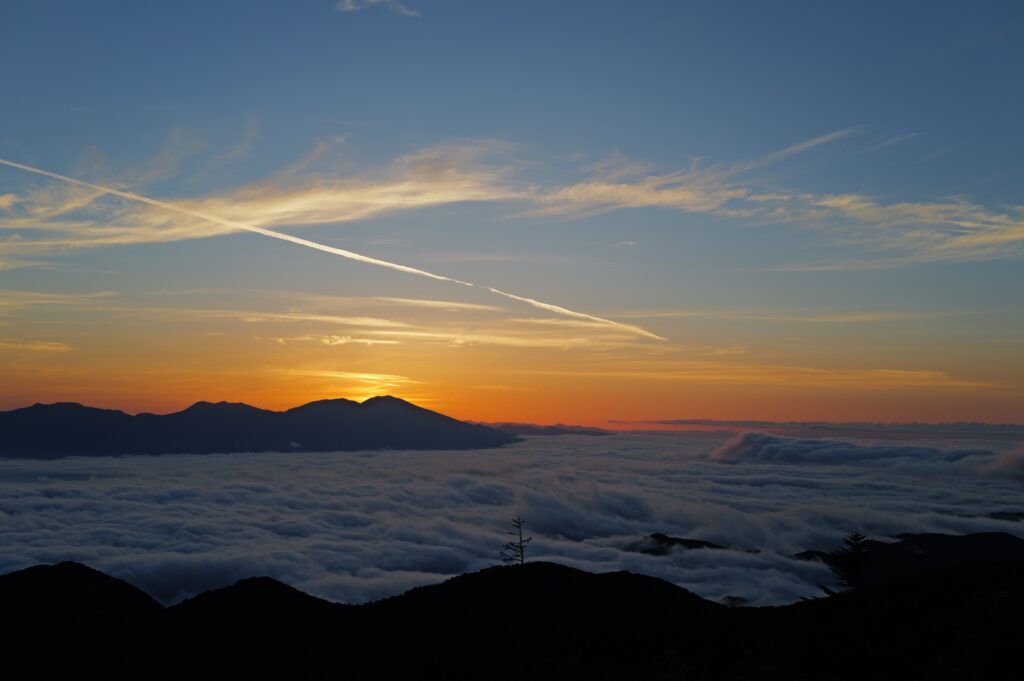
Days are short. Dark by five, which changes the rhythm of a trip more than the temperature does. You drive less, stop earlier, and spend longer in the evening. It’s not a limitation once you plan for it, and honestly it’s part of the appeal — long evenings are what winter camping is for.
Some things close. Mountain passes shut for the season, and a proportion of auto-camp sites close from around November to April. Others stay open specifically for winter campers and are magnificent. This is the season where a bit of local knowledge saves you a long drive.
Everything is quieter. Fewer people, fewer vehicles, and the places that are shoulder-to-shoulder in autumn are yours.
How the vehicles are set up
Winter tyres, fitted as standard. Every vehicle in the fleet moves to studless winter tyres for the season. No cost, no request needed, no box to tick. We make the call on timing based on the weather rather than the calendar, because the weather doesn’t care what month it is.
That matters more than it sounds. Driving on snow-covered or icy roads without appropriate winter tyres or other required anti-skid equipment isn’t just unwise in Japan — it can be a traffic offence. And a rental that puts winter tyres behind a paywall is a rental that expects some customers to decline them.
It has also quietly become a question of access. In recent years a growing number of campgrounds around Mt Fuji have introduced entry conditions permitting only 4×4 vehicles on winter tyres — a sensible response to two-wheel-drive cars getting stuck on their access roads and blocking them for everyone else. It’s a miserable thing to discover at the gate after a three-hour drive. Every one of our vehicles meets that requirement as a matter of course, for the whole season, without anyone needing to ask for it.
Four-season bedding, also standard. Proper winter bedding, not a summer set with an extra blanket thrown in. This is the single biggest factor in whether a cold night is wonderful or miserable, and it isn’t somewhere we economise.
The winter set goes in when the weather turns, on the same judgement call as the tyres, and includes pillows, a thermal heat-retaining under sheet, a high-quality goose down winter duvet, a winter blanket over the top, and an electric blanket. It’s a bed rather than a sleeping arrangement, and it’s the reason people are surprised by how comfortable a cold night turns out to be.
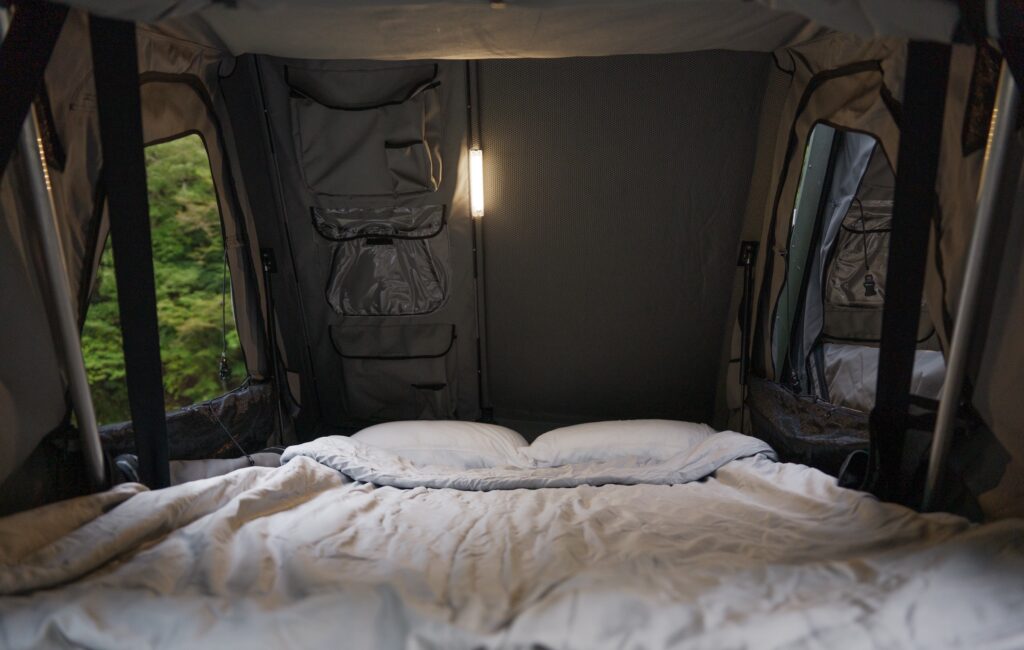
Diesel heating, optional. For anyone heading into real snow, or simply wanting the luxury of a warm space to get changed in, a diesel heater is available. It’s the one thing on this list we don’t fit as standard, because plenty of winter trips genuinely don’t need it — but on the ones that do, it changes everything.
There’s a broader point here. What some people would call harsh conditions is precisely what this equipment was designed for. Overland vehicles and expedition-grade rooftop tents weren’t built for warm evenings by a lake; they exist because people needed to sleep somewhere cold, wet or remote and still be fine in the morning. Winter isn’t the season these campers cope with. It’s the season they were made for, and it’s when the difference between the good ones and the rest becomes obvious in about one night.
Sleeping warm in a rooftop tent
This is the question we’re asked most, and it’s where the quality of the equipment really counts.
Our rooftop tents work extremely well in winter, and the reasons are practical rather than magical. You’re sleeping on a proper mattress with insulation beneath you, rather than putting a thin mat onto frozen or wet ground. The bedding stays made and dry inside the tent rather than being unpacked into the cold each night. The sleeping space is compact, and once two people are inside it warms up surprisingly quickly.
Which is a technical way of describing something nicer than that. Winter brings people closer together, quite literally — a small warm space, the cold on the other side of the canvas, and nowhere much to be until morning. Couples tend to notice it first. It’s one of the reasons the winter trips are the ones people talk about afterwards.
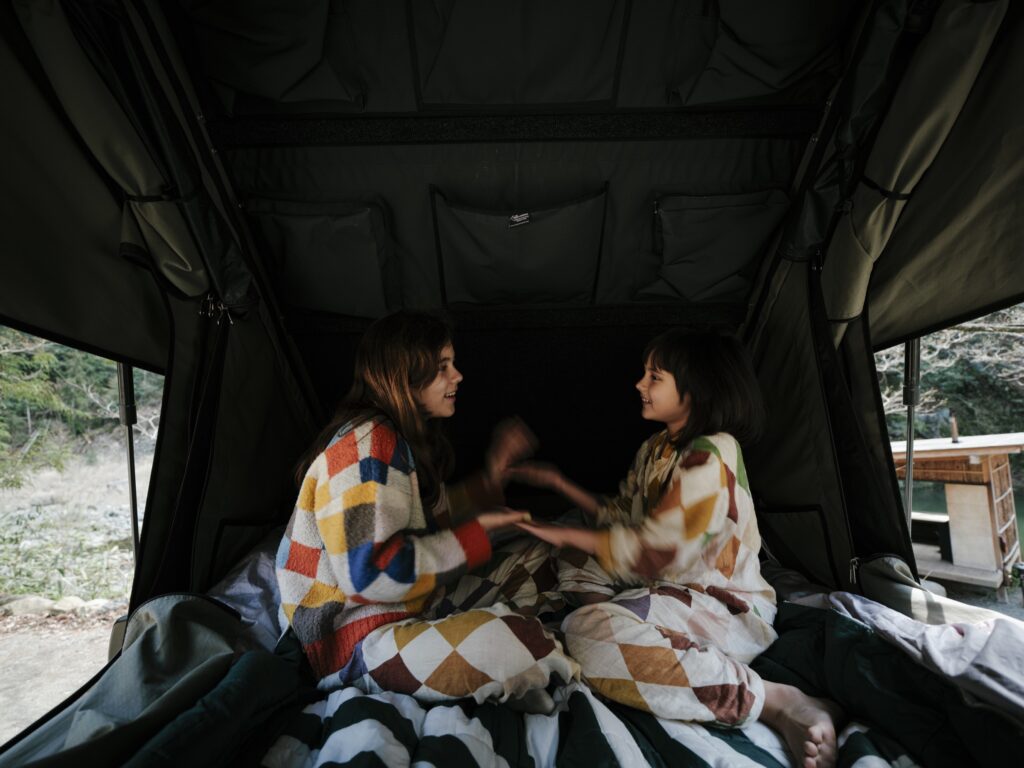
What actually keeps you warm is the bedding, the fact that you’re not in contact with the ground, and getting into the tent warm rather than cold. Which is where the day’s routine matters: an onsen at four in the afternoon, dinner, then bed while you’re still radiating heat, is a completely different night from crawling in cold at ten.
A few things that help:
- Change out of anything damp before you get in. Damp clothing is the main reason people get cold at night.
- Eat properly and drink something hot. Your body needs fuel to keep you warm.
- Vent slightly. Sealing every panel traps moisture, which condenses and makes everything damp. A small opening is warmer over a whole night than none.
- Boots and electronics come in with you. Frozen boots at seven in the morning are a genuinely bad start.
Where people actually come up short
It isn’t the tent, and it isn’t the bedding. We’ve spent a long time getting both of those right, and they do their job.
It’s clothing. Almost everyone who has a cold, difficult winter trip has underpacked for being outside the tent — standing at the kitchen at six in the evening, walking to the onsen, brushing snow off the vehicle in the morning. The bed is warm. The twenty minutes either side of it are what catch people out.
So pack as though you were going to the snow, because you are — sub-zero temperatures and wind chill, standing still rather than moving. Thermal base layers top and bottom, a proper mid-layer, a genuinely warm jacket, a hat, thick socks, and waterproof footwear you can stand around in. Gloves more than anything — everything outside in winter involves your hands, and cold hands ruin an evening faster than cold anything else. Layers you can add and shed, rather than one heavy coat. If you’d wear it on a ski trip, bring it.
It’s the cheapest possible insurance, it weighs nothing in a vehicle this size, and it’s the difference between a winter evening outside being magical and being something you endure.
Driving in winter
Less difficult than most visitors fear, and the roads are cleared to a standard that has to be experienced. Japan takes snow seriously — heated road surfaces in some towns, sprinkler systems that keep carriageways wet rather than icy, and ploughing that starts early and doesn’t stop.
Studless tyres do most of the work. They’re what Japan runs on and they’re what your vehicle will have. On cleared and treated winter roads they’re normally the right equipment — but tyres don’t cancel physics, and speed, following distance and the surface in front of you still matter.
Chain regulations are the exception worth knowing about. This catches out almost every foreign driver, because it’s counterintuitive. During exceptional snowfall — when a heavy snow emergency warning is issued — the authorities can impose a chain regulation on certain designated stretches of road. There are thirteen such sections nationwide, six on national roads and seven on expressways, chosen because they’ve historically seen vehicles become stranded.
Inside a chain regulation, studless tyres are not enough. Chains must be fitted to the drive wheels, and that applies to 4×4 vehicles too.
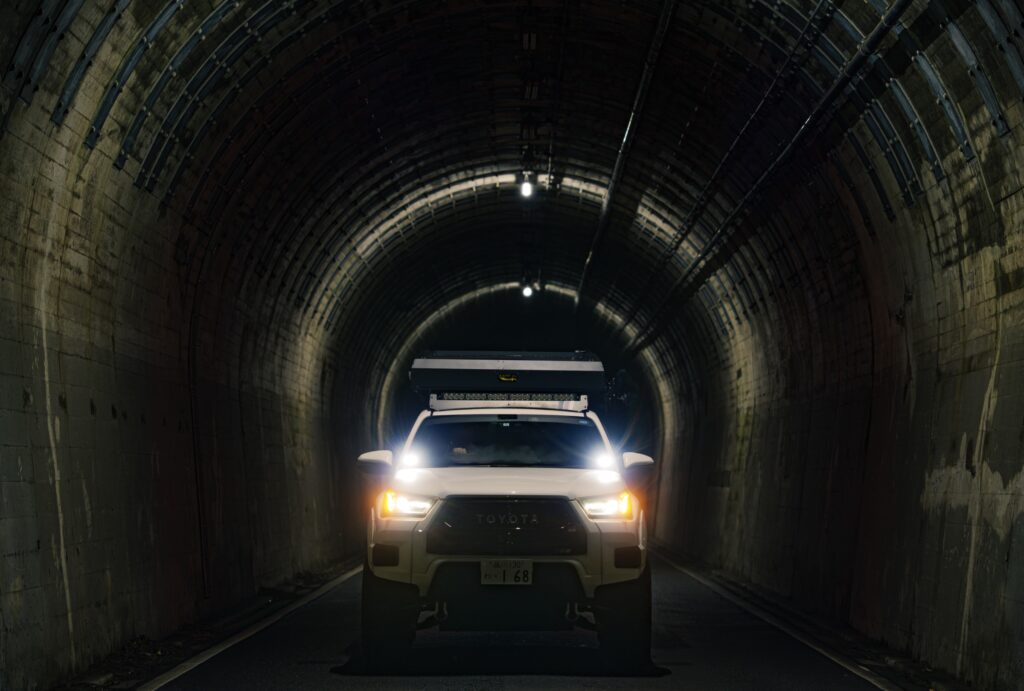
Inspectors check at the entry point, and without chains you won’t be permitted through the regulated section. In practice these regulations are rarely imposed, and they accompany heavily publicised exceptional snowfall — so you should have warning if you’re keeping an eye on road and weather information. If your route crosses one of those sections during a serious snow event, plan around it rather than hoping. Textile snow socks are accepted as chains, and are far easier to fit at the roadside in the dark than traditional metal ones.
Separately, and more commonly: passes close. Many mountain routes are simply shut for the winter, and a road that exists on the map in July may not be open in January. Check before you commit to a long detour.
And the driving itself. Gentle inputs, longer gaps, brake early. Bridges and tunnel mouths freeze first. Compacted snow is manageable; the shine of black ice on a shaded corner is the thing to watch for. Don’t feel any pressure to match the speed of local traffic — some of those drivers have thirty winters behind them and some are simply going too fast. Drive to the surface you can actually see, leave far more space than usual, and make every input gentle.
Four winter habits that matter
None of these are difficult. They’re just the habits that experienced winter travellers have and first-timers haven’t been told about yet.
Cook outside, always. Never run a gas cooker or any unvented burner inside a closed vehicle or a zipped tent, even briefly. Cooking outdoors under the awning is part of the pleasure anyway. (A diesel heater is a different thing entirely — it’s designed to vent externally — just keep its exhaust and intake clear of snow.)
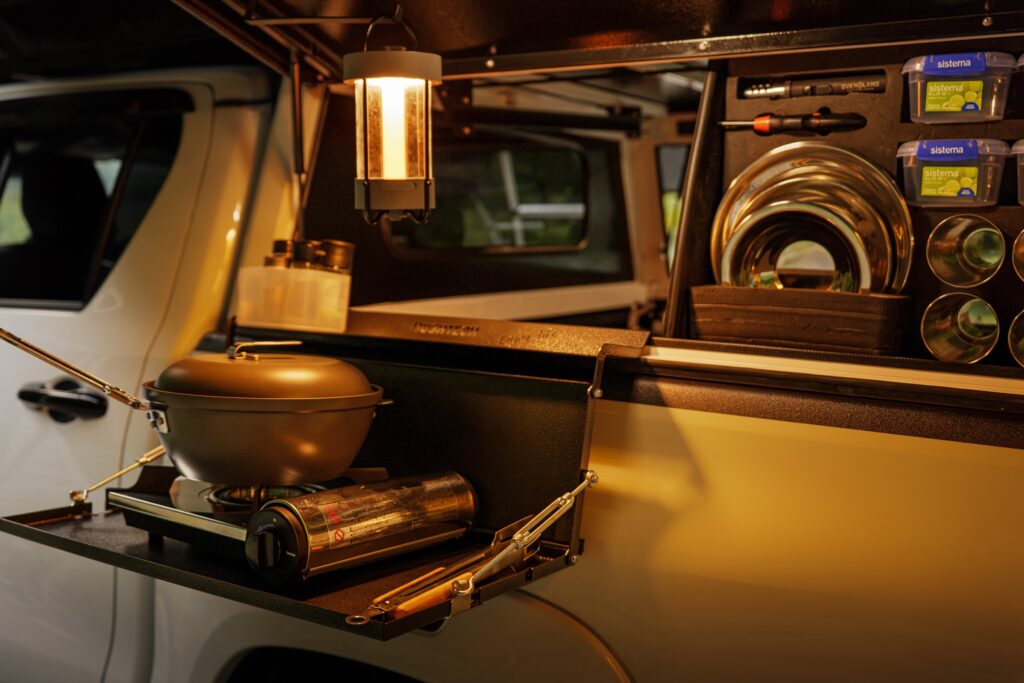
Don’t sleep with the engine running. Snow can block the exhaust, and carbon monoxide then has nowhere to go but into the cabin. If you ever do need to run the engine while stationary in falling or drifting snow, clear the exhaust area first and keep checking it — snow banks up again faster than you’d think.
Let someone know your route if you’re heading somewhere remote in heavy weather. Mobile signal disappears in mountain valleys, which is half the charm and worth planning around.
Travel with a bit more than you need. Water, snacks, fuel, spare layers. If a road closes and you’re waiting an hour for a plough, the difference between a good story and a bad one is whether you’ve got a hot drink.
Where to go
Fuji and the five lakes, an easy run from our Tokyo base, for the version of Japan everyone has in their head — the mountain snow-capped and sharp, out clear for days at a time, and lakes with almost nobody at them.
Nagano and the Northern Alps for the full winter picture — deep snow, hot springs, mountain views that justify the drive on their own.
The Sea of Japan coast for weather that feels like the end of the world in the best way. Grey seas, snow to the shoreline, small ports, extraordinary seafood.
The Pacific side and Izu, from Tokyo, for the mild version: cold clear nights, little snow at lower elevations, empty coastal roads and Fuji sitting out sharp against the sky all day. The higher Amagi routes can still see winter conditions.
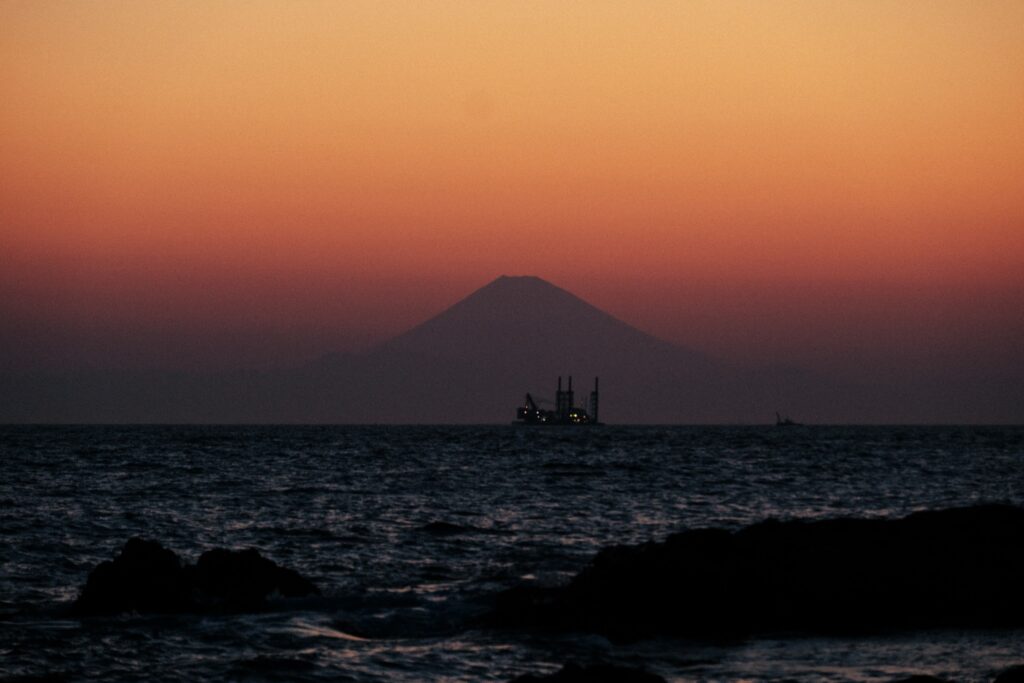
Kyushu, from Fukuoka, for the gentler version of winter. Volcanic country, steaming hot spring towns, and coastline you can walk in January — though the mountains inland still get snow and ice, so it isn’t a season to switch off entirely.
And for anyone who rides. Every winter we have snowboarders and skiers take campers toward the smaller ski areas and lesser-known resorts, waking up close to the lifts wherever overnight parking is permitted. It’s a very good way to travel in this season: no accommodation to book, no shuttle timetable, first lift with your kit already at the bottom of it. Check each resort’s rules, though — overnight parking policies vary and some don’t allow it.
If you’re heading into genuine backcountry terrain, treat that as a separate proposition entirely. It needs avalanche equipment, the training to use it, and either real experience of the terrain or a qualified guide.
The right choice depends on what you want winter to feel like, and it’s exactly the kind of thing we’d rather talk through with you than guess at. Tell us what you’re picturing and we’ll point you at the region that delivers it.
The onsen part, which is really the whole point
There’s a specific pleasure available in Japan between December and March that doesn’t exist in many other places.
You’ve driven through snow all afternoon. It’s dark by five. You park, walk into a small onsen in a town of four hundred people, pay at the counter, and sit in water hot enough to hurt while snow falls on your head. Then you walk back to a vehicle where the bed is already made, eat something hot, and sleep better than you have in months.
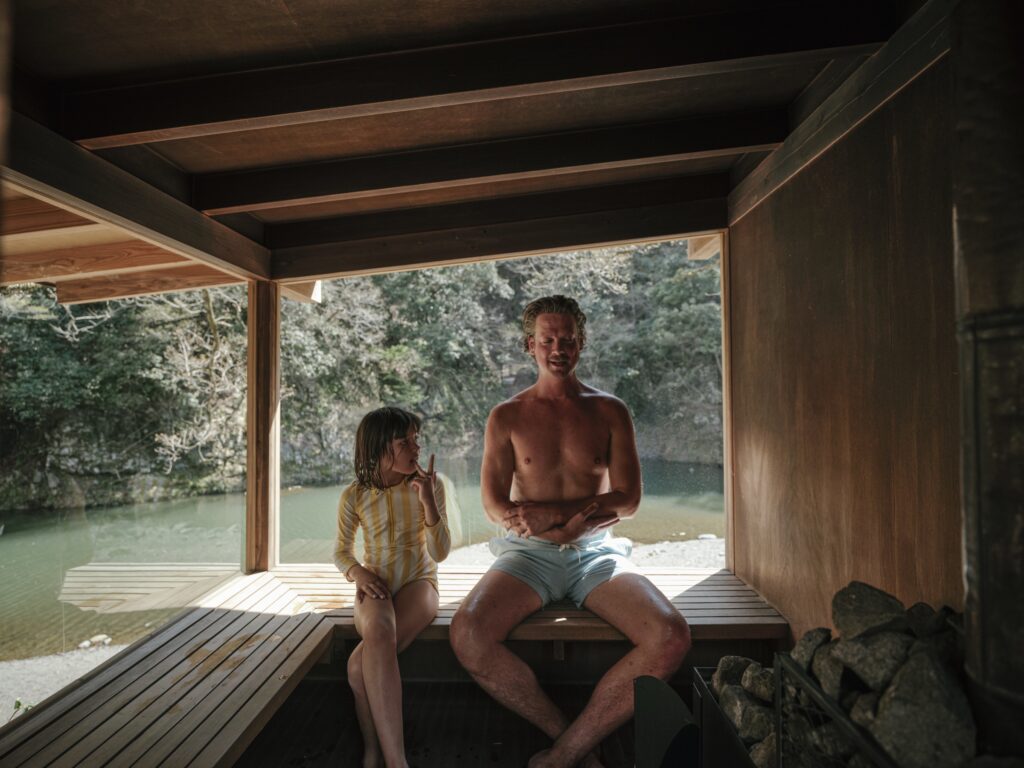
That’s the trip. Everything else in this article exists to make that possible.
Planning notes
Book the first nights. Winter is not the season to be improvising your first evening. Reserve somewhere for the first night or two while you find your rhythm.
Check what’s open. Auto-camp availability drops sharply in winter, and the sites that stay open are worth knowing about in advance. Ask us — we track this.
Allow more time than the map says. Snow driving is slower, days are shorter, and a route that takes four hours in September may take six in February.
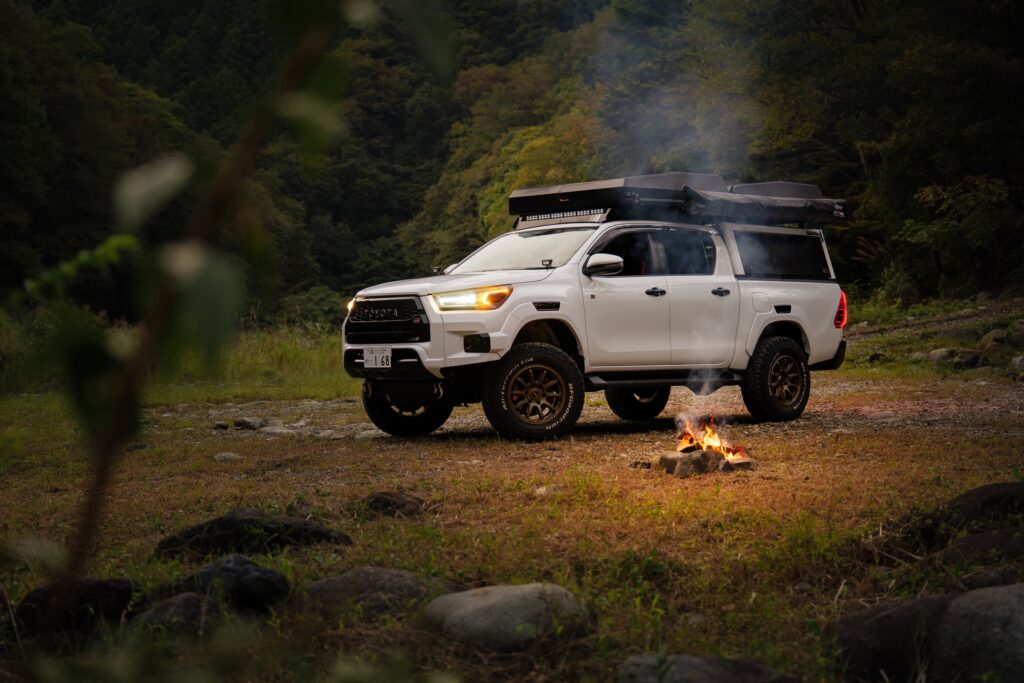
Come at the right end of the day. Aim to be parked with an hour of light left. Setting up in the dark in the cold is the one part of winter camping nobody enjoys.
And ask about the heater. If you’re heading into snow country, or travelling with anyone who feels the cold, it’s the option worth taking.
See the fleet › · Where you’ll sleep › · First-timer’s guide ›


