

Almost everyone planning this trip arrives at the same fork. There’s the motorhome, which looks like a small apartment. There’s the van conversion, which looks sensible and costs less. And there’s the 4×4 with a tent on the roof, which looks like the most fun and raises the most questions.
Most comparisons of these are written by companies that only rent one of them, which makes them easy to predict. So here is the honest version, including the parts where we lose.
The short answer. A motorhome suits larger groups who want a bathroom and indoor living space, and who’ll stay on main roads. A van conversion is the economical middle — cheapest to run, comfortable enough, limited where it can go. A 4×4 with a rooftop tent sleeps up to four and suits people who want to reach smaller, quieter places and would rather live outside the vehicle than inside it. If your priority is a shower on board, it isn’t us. If your priority is where you wake up, it probably is.
The three formats, briefly
Motorhomes and RVs are purpose-built living spaces on a truck or large van chassis. Fixed beds, a kitchen, usually a toilet and shower, a water tank, and space to stand and move around. Everything happens inside.
Van conversions — the Hiace and similar are the Japanese standard — are ordinary vans fitted out with a convertible bed, a small kitchen unit and storage. Compact enough for most roads, cheap to run, and the most common rental in Japan by a wide margin.
4×4 overland campers put the sleeping space on the roof and the kitchen in the back or on a slide-out. The vehicle stays a vehicle. Living happens outdoors, under an awning, with the tent above you.
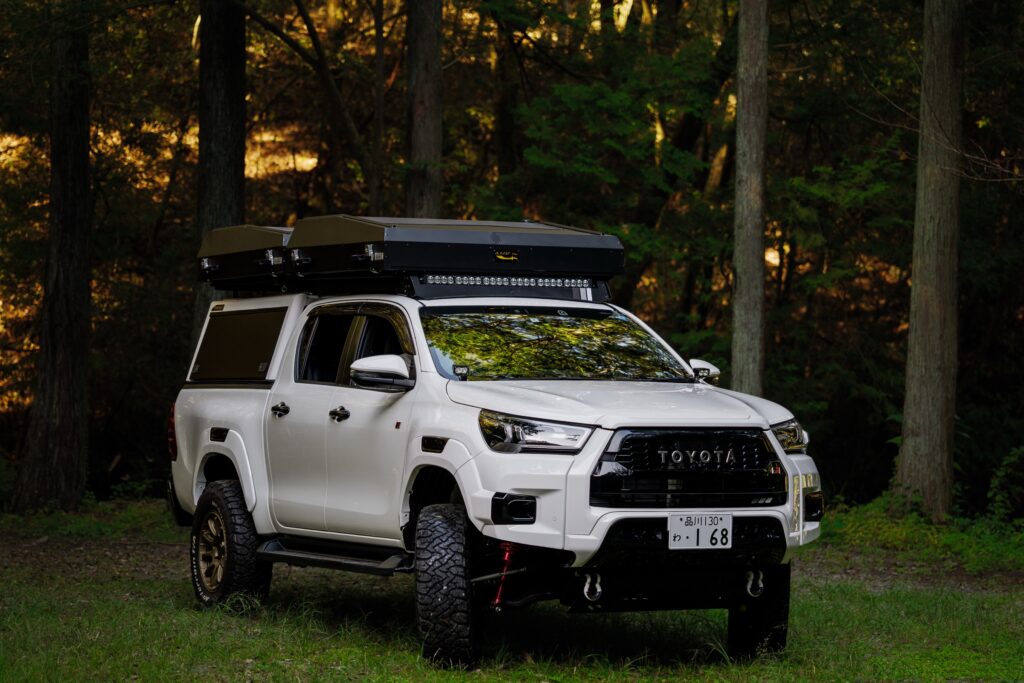
At a glance
| Motorhome / RV | Van conversion | 4×4 overland camper | |
|---|---|---|---|
| Sleeps | 4–6 | 2–4 | Up to 4 |
| Bathroom on board | Usually | Rarely | No |
| Standing headroom | Yes | Sometimes | No |
| Cost to run | Highest | Low | Lowest to mid, by vehicle |
| Narrow mountain roads | Difficult | Manageable | Easy |
| City parking | Very difficult | Manageable | Easy |
| Bed quality | Good, fixed | Assembled nightly | Good, permanently made |
| Living space | Indoors | Indoors | Outdoors |
| Bad-weather day | Best | Cramped | More exposed — awning or change direction |
When a motorhome or van conversion is the better choice
We’d rather say this plainly than have you find out in week two.
You’re travelling as a group of five or more. Our campers sleep up to four. Beyond that, a motorhome is simply the right tool.
You want a bathroom on board. We don’t have one, and there’s no version of this where we win that argument. Japan makes it less of a problem than most countries — onsen, sento and spotless public facilities are remarkably widespread — but if the idea of not having your own is what’s worrying you, believe the worry.
Fuel economy is a deciding factor. Partly — it depends which of ours you mean. A Hiace conversion will beat a Defender or a Hilux every day of the week, and that’s physics, not marketing. A Jimny Sierra, on the other hand, will beat the Hiace. If running cost is driving your decision, ask us and we’ll tell you honestly where each vehicle sits.
You’re on a tight budget. Van conversions are the cheapest way to do this in Japan, and there’s nothing wrong with the trip you’ll have in one.
You’re travelling mostly in and around cities. An enclosed camper is better at shutting the world out, and sometimes that’s exactly what you want — a busy michi-no-eki on a Saturday night, a town car park, a service area beside a motorway. Ours is built to do the opposite, which is a poor trade if you’re spending most nights somewhere populated.
The physical side is a real limitation. Sleeping in a rooftop tent means a ladder, including in the middle of the night. Setting up and packing down happens outdoors, standing. There’s no indoor space to move around in, and nowhere to sit out a long afternoon under cover. If reduced mobility, balance, or anything that makes climbing difficult applies to someone in your party, a motorhome or conversion is the better and safer choice — and we’ll tell you that if you ask.
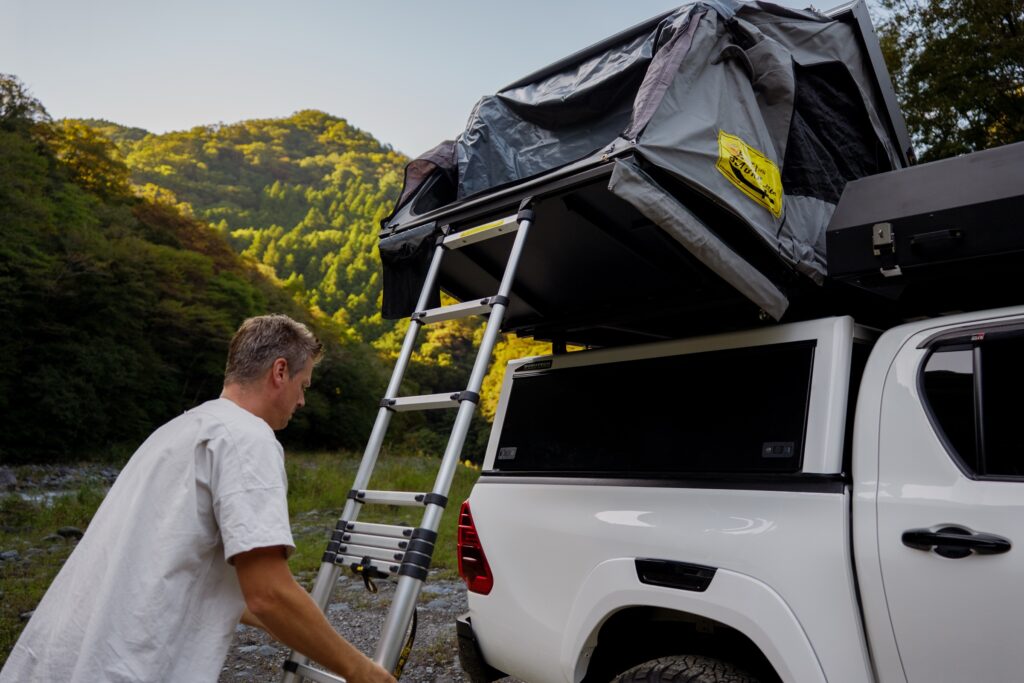
Rain is a serious concern for your dates. A wet afternoon in a motorhome is a comfortable one. A wet afternoon for us means an awning, a coffee, and a decision about whether to move somewhere better.
None of that costs us anything to say, because none of those travellers were ever going to be happy in one of our vehicles.
One note on comparing prices
A daily rate is only comparable if it covers the same things, and in this industry it very often doesn’t.
Before weighing one quote against another, check each for: bedding suitable for the season, a table and chairs, cooking equipment, gas, a fridge, power to run and charge things, an ETC card, insurance and the excess attached to it, additional drivers, mileage limits, one-way fees and any cleaning charge on return.
Some operators include most of that. Plenty price the vehicle and sell the rest as extras — which is a legitimate way to run a business, but it means the headline figure isn’t the figure. A camper without bedding, a stove and a fridge is a car you sleep in.
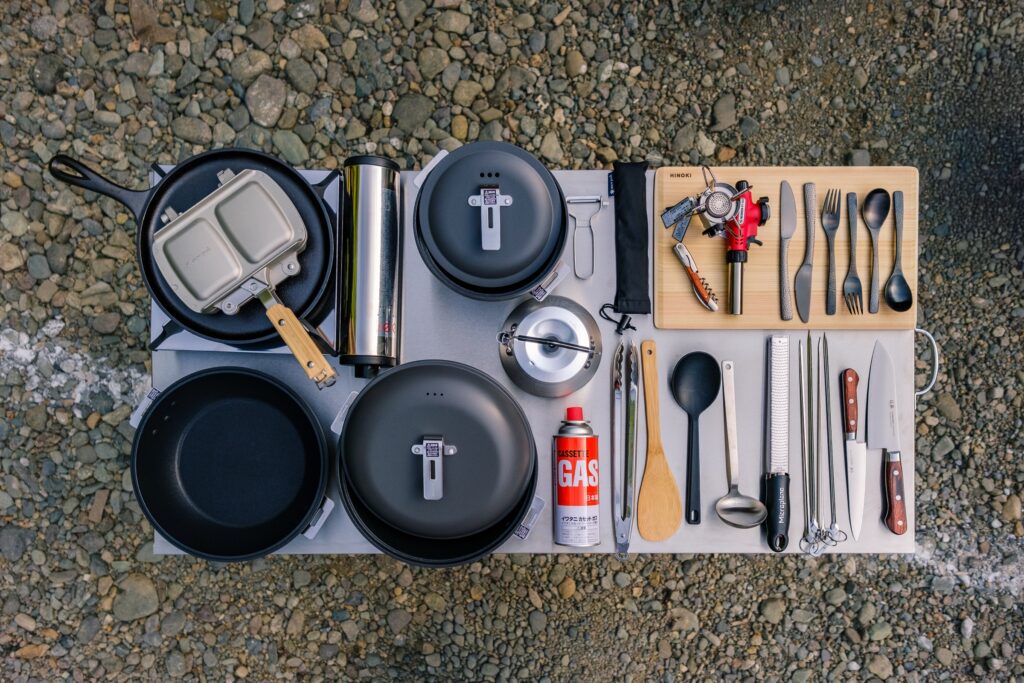
We include all of it, at one standard, with no upgrade tiers. Whether that works out cheaper for your trip depends on the trip. It does mean the number on the quote is the number you pay.
Where the 4×4 earns its place
Worth clearing up first: the point of a 4×4 here isn’t driving off-road. It’s having a smaller, capable vehicle that stays comfortable and unbothered when the road turns steep, narrow, wet, gravelled or snow-covered — which describes a surprising number of the roads worth taking in Japan.
It goes where the others turn around. This is the whole argument, and in Japan it matters more than it would in Australia or the American west. The best places here sit at the end of narrow, steep, well-surfaced mountain roads with tight switchbacks and passing places. A large motorhome can make roads like that difficult or impractical. A conversion often manages them, but on the narrowest routes the driver spends more of the day watching mirrors than scenery. In a compact 4×4 you simply drive.
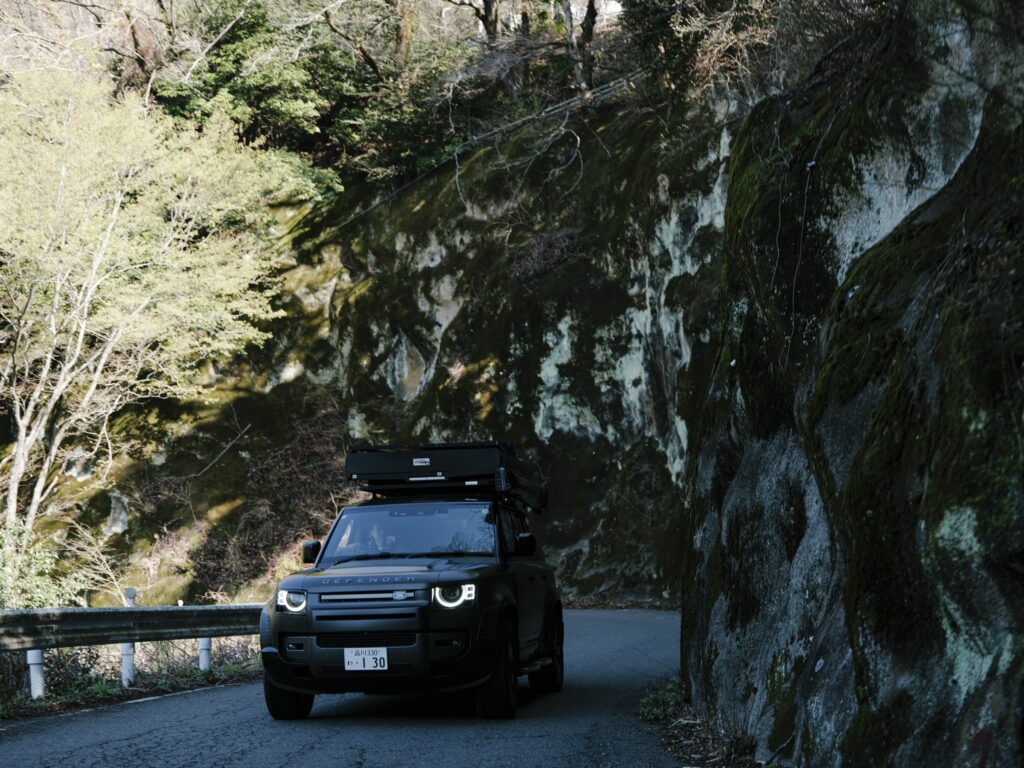
It parks almost like a normal car. Japanese parking spaces are designed around Japanese cars. Large motorhomes can be awkward in town car parks, at smaller roadside stops and in some michi-no-eki layouts — which quietly rules out a lot of spontaneous stopping. Most of our campers fit into spaces much closer to an ordinary passenger car than a motorhome.
The bed is already made. Click, click, push and the tent opens with the mattress and bedding in position. No converting the dinette, no cushions, no gap in the middle. Over a ten-day trip that’s twenty small tasks you never do.
You live outside. Which is the real difference, and the one people underestimate until they’ve had it. In an enclosed camper you watch Japan through a window. In ours the kitchen slides out into the open air, the chairs go on the grass, and the evening happens outdoors with the vehicle as the back wall of it. You came for the mountains and the rivers. This is the format that puts you in them rather than beside them.
It costs less to move. Expressway tolls in Japan are charged by vehicle class and ferries by length, so a large motorhome quietly adds cost at every gate and every crossing.
Children take to it immediately. Worth saying, because people assume the opposite. A ladder and a tent on the roof is, to a six-year-old, the single best thing that has ever happened — and the outdoor kitchen means the adults get to cook while the children are outside rather than underfoot in a corridor.
You interact with it. An enclosed camper is somewhere you sit. This is something you use. There’s equipment to set up and pack down, a kitchen to work in, a fire to build, a tent to open and close, a routine that becomes yours by about the third evening. For a fair number of people that turns out to be the beginning of a much longer interest rather than a one-off holiday — which is not something anyone expects when they book.
And they look considerably better. We’re not going to pretend that isn’t part of it, or that you won’t take an unreasonable number of photographs of your own parked car.
The part we didn’t expect is how many people propose on these trips. Enough that it’s no longer a surprise when someone quietly asks whether we can help with the timing. There’s something about a vehicle worth having in the photograph, parked somewhere nobody else is, on a night they’ll be describing for the rest of their lives.
The Japan-specific factors most comparisons miss
Roads are narrow, and the good ones are narrower. Japan’s road network is superbly maintained right down to single-lane mountain routes — but single lane means what it says, with passing bays and blind corners. Vehicle size is the single biggest constraint on where you can go here, more so than in almost any other camping destination.
Winter changes the calculation. From roughly December to March, snow and ice make vehicle setup far more important than at any other time of year — tyres as much as drivetrain. A properly winter-equipped 4×4 gives you considerably more confidence and flexibility than a typical two-wheel-drive conversion, which is why the season is when the difference is starkest.
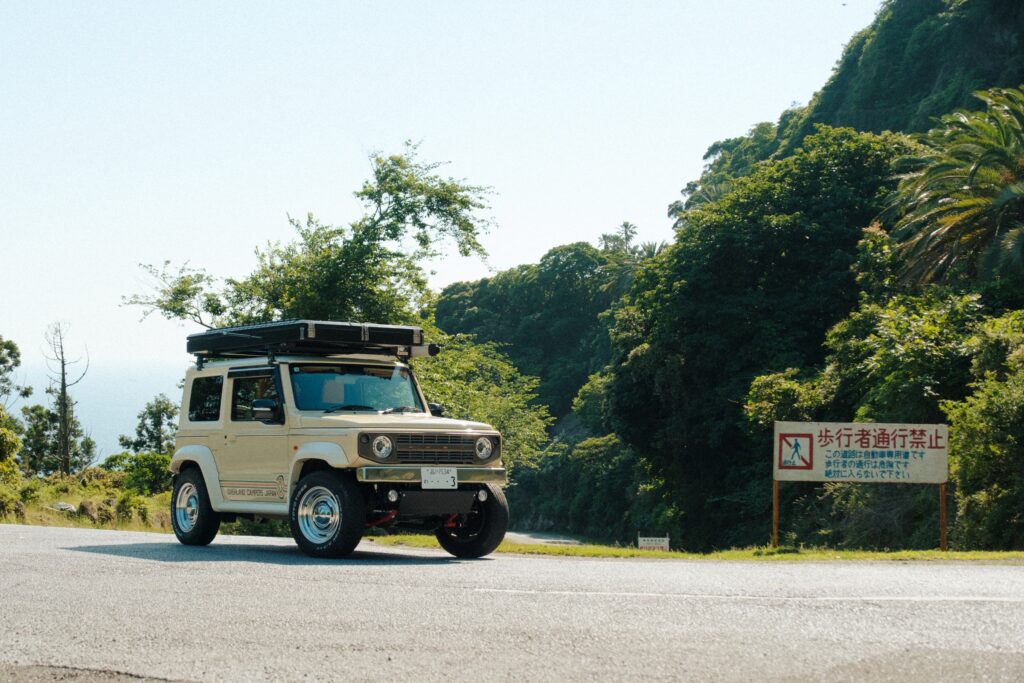
Auto-camp pitches have size limits. Plenty of the most beautiful sites in Japan simply can’t take a large motorhome, and won’t say so until you’re trying to reverse into one.
Onsen culture reframes the bathroom problem. This deserves stating clearly, because it’s the concern that pushes most people toward a motorhome. Japan has thousands of hot spring baths and day-use bathhouses, and ending a day in one beats a cubicle shower by a distance — it stops being a compromise and becomes one of the better parts of the trip. Toilets are rarely a problem: convenience stores, roadside stations and public facilities are clean, frequent and open around the clock. A bathroom on board solves a problem Japan has already solved rather better.
The question underneath the question
Once you strip out the practicalities, the choice is not really about vehicles. It’s about whether you want to be inside or outside.
An enclosed camper is a room that moves. That’s genuinely appealing — it’s warm, it’s private, everything is within reach, and on a bad-weather day it’s the better place to be. Plenty of people travel that way and love it.
A 4×4 with a rooftop tent is the opposite proposition. The vehicle is transport and storage; the living happens in the open. It’s better on a good day and worse on a wet one, it demands slightly more of you, and it puts you in direct contact with wherever you’ve stopped — the temperature, the sound of the river, the dark.
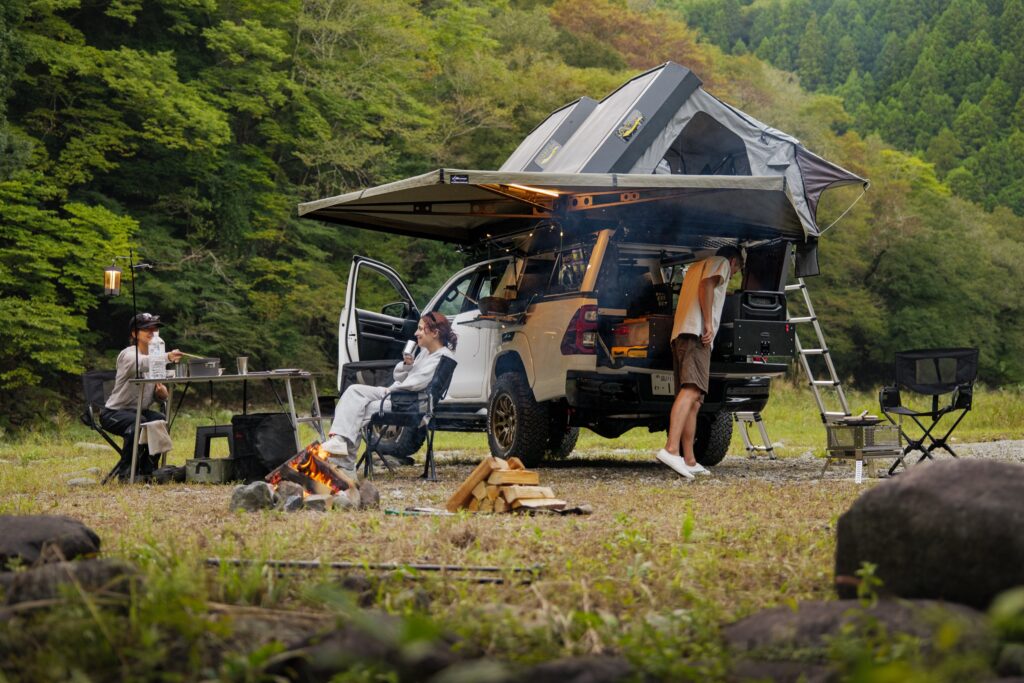
Neither is correct. But knowing which one you actually want makes the rest of the decision straightforward.
How to decide in about a minute
Ask yourself three questions, in this order.
How many people are sleeping? Five or more, and the answer is a motorhome. Two to four, keep going — though for four adults, which vehicle you choose matters.
Is a bathroom on board a requirement or a preference? Requirement, and it’s a motorhome. Preference, and Japan will change your mind within three days.
Where do you picture yourself in the evening — inside or outside? Inside, take the conversion. Outside, you already know.
One more thing, if indoors is the sticking point
If everything above sounds right except the part about living outside, there’s a version that splits the difference.
The Hilux Cabin is our own build: a proper enclosed interior on a 4×4 chassis. Somewhere to sit, cook and wait out an afternoon of weather, without giving up the access that makes the format worth having. As far as we know it’s the first of its kind in any market, which is mostly because we wanted one and nobody was making it.
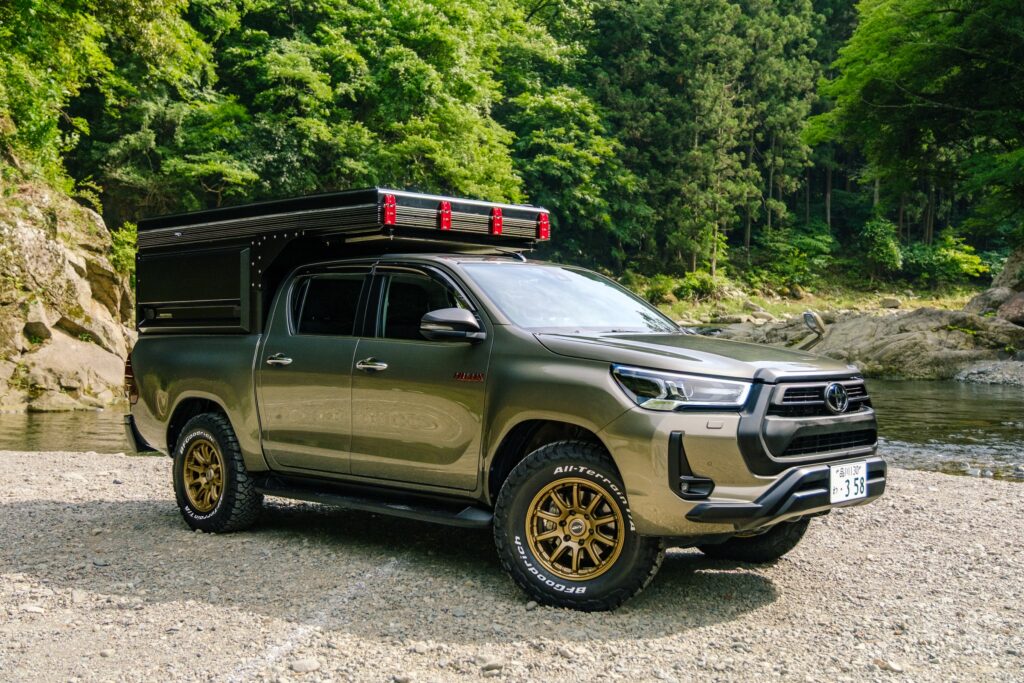
What we do
Overland Campers Japan builds and rents 4×4 overland campers from Tokyo and Fukuoka: Suzuki Jimny Sierras, Toyota FJ Cruisers, Land Rover Defenders and Toyota Hilux builds, each with a rooftop tent, a full outdoor kitchen, a fridge on a dedicated battery system, and everything else already aboard. One standard, no upgrade tiers.
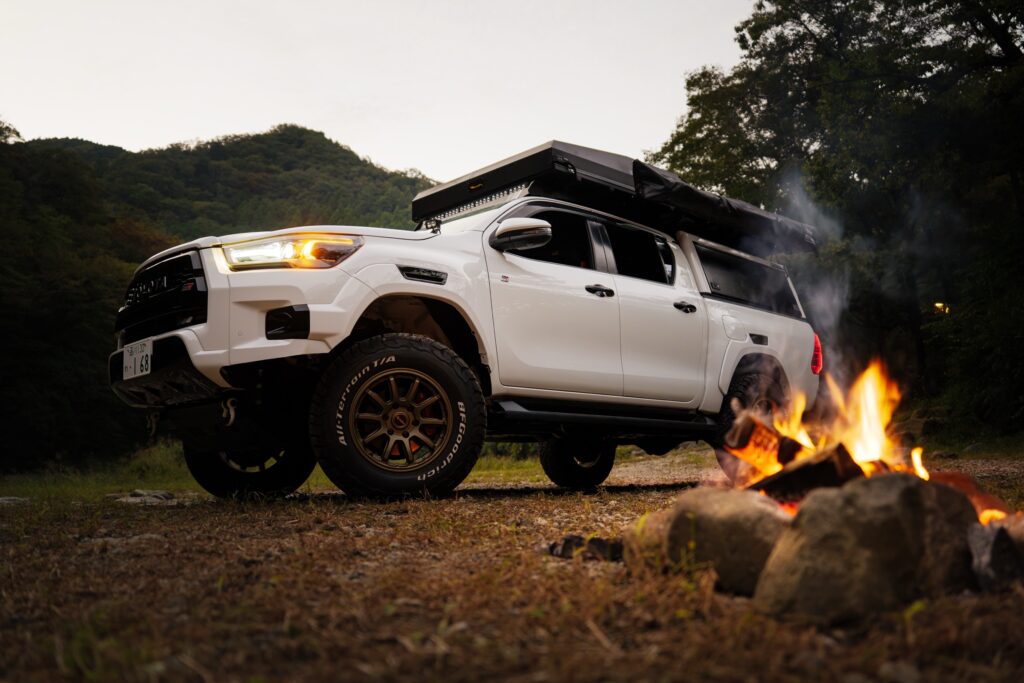
We’re the right answer for some trips and the wrong one for others, and we’d genuinely rather tell you which before you book than after. If you’re weighing it up, ask us — we’ll tell you honestly if you’d be better off elsewhere.


