

This is the question we’re asked more than any other, and the answers online are mostly vague. Some guides say you can sleep anywhere. Others say roadside stations ban it outright. Both are wrong, and the difference matters — not because anyone is likely to arrest you, but because getting it right is the difference between being a guest and being a nuisance.
Here is the honest version, including the parts most English-language guides skip.
The short answer. Five options: auto-camp sites (bookable, excellent facilities, the straightforward choice), RV Parks (certified specifically for overnight vehicle stays), michi-no-eki roadside stations (free, 24-hour toilets, intended for rest rather than accommodation), expressway service areas (rest only), and informal spots beside rivers, coasts and mountains, where what’s permitted depends entirely on the land and on what you’re actually doing there. Most good trips use a mix.
Auto-camp sites
The straightforward option, and where we’d suggest a first-timer spends at least the first night or two — or the whole trip, honestly. Japanese auto-camps are so good that plenty of people never feel the need to sleep anywhere else.
Japan has well over a thousand of them, many in genuinely beautiful positions — lakesides, river valleys, forest clearings, headlands. Most people are surprised by the standard. They’re clean, carefully run, and a good number are close to luxurious: heated toilet seats, proper hot showers, onsen or bath facilities on site, and a shop selling firewood, ice and local produce.
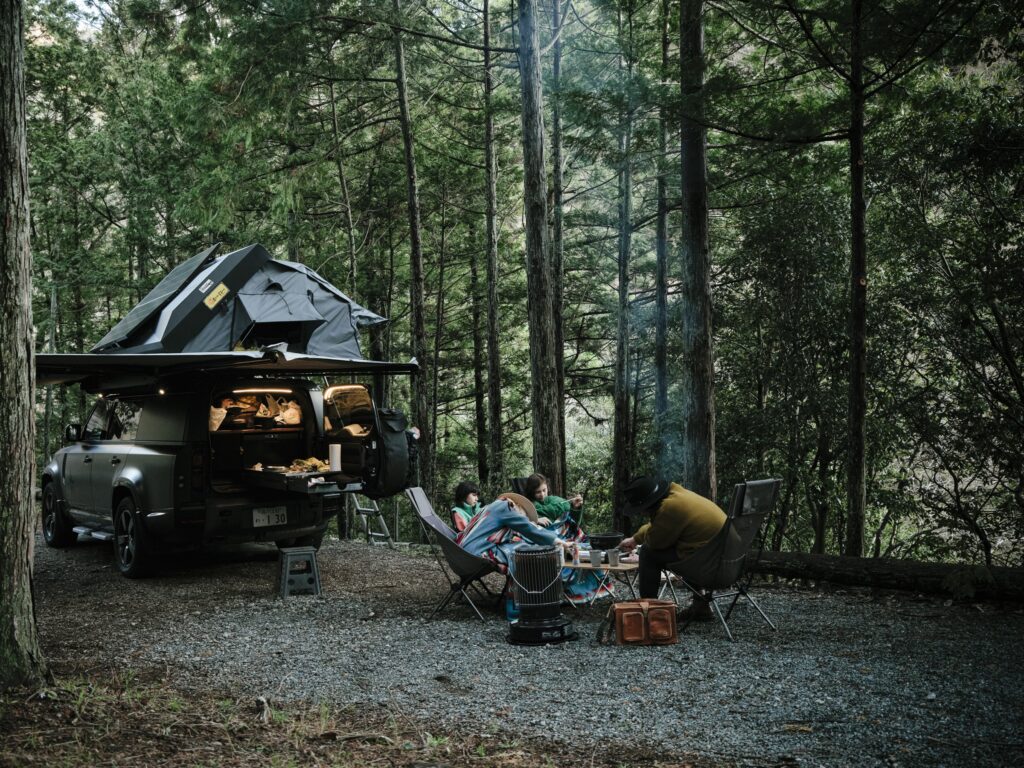
Booking. Popular sites fill in spring, autumn and around national holidays, and many take reservations by phone or through Japanese-language websites. Book ahead for those periods; outside them, midweek availability is usually easy.
Calling in works. Turning up doesn’t always. If you drive past a site you like the look of, stop and book it there and then — for that night or the next one. It’s one of the better uses of an afternoon, and it beats arriving at six and hoping.
Worth understanding why. People here book almost everything, as a matter of course, so a small rural campground with nothing on the books that day may simply not be staffed. There is nobody sitting in the office on the off chance that a free-spirited overlander from the other side of the world might drop in at dusk. That thought has genuinely not occurred to anyone. Ring ahead, or call in during the day and sort it out face to face. You’ll be fluent in charades by about day three; Google Translate is the backup.
Plan around the week, not just the map. If somewhere is famous — the lakeside everyone photographs, the site with the view — go on a weekday. Save weekends for the lesser-known places you’ve turned up yourself, which are much more likely to stay quiet. Get that the right way round and you’ll have the celebrated spots nearly to yourself and the secret ones entirely so. Get it backwards and you’ll spend Saturday night parked between two family tents at the place you’d been looking forward to for months.
Translation is what makes this painless. Google Translate’s page translation in your browser handles most campsite booking sites well enough to get through them, and the camera and conversation modes on your phone will carry you through the rest of the trip — signage, menus, a phone call written down and shown to someone. It’s the single most useful thing on your phone here.
Cost. Modest by any international standard, typically charged per pitch or per vehicle plus a small per-person fee.
Worth knowing. Some sites have pitch size limits, and check-in windows can be earlier than you’d expect — often closing around 5pm. Turning up at seven expecting to be let in is a common and avoidable mistake.
RV Parks
The option most foreign guides miss entirely, and often the cleanest answer to the whole question.
RV Parks are sites certified by the Japan RV Association specifically as places to sleep overnight in a vehicle. There are nearly 700 of them nationwide, and the number climbs most months. They sit alongside onsen, hotels, roadside stations, farms and tourist facilities. Facilities commonly include power, rubbish disposal and 24-hour toilets, with water, bathing and other services varying by location — worth checking the individual site before you commit to it.
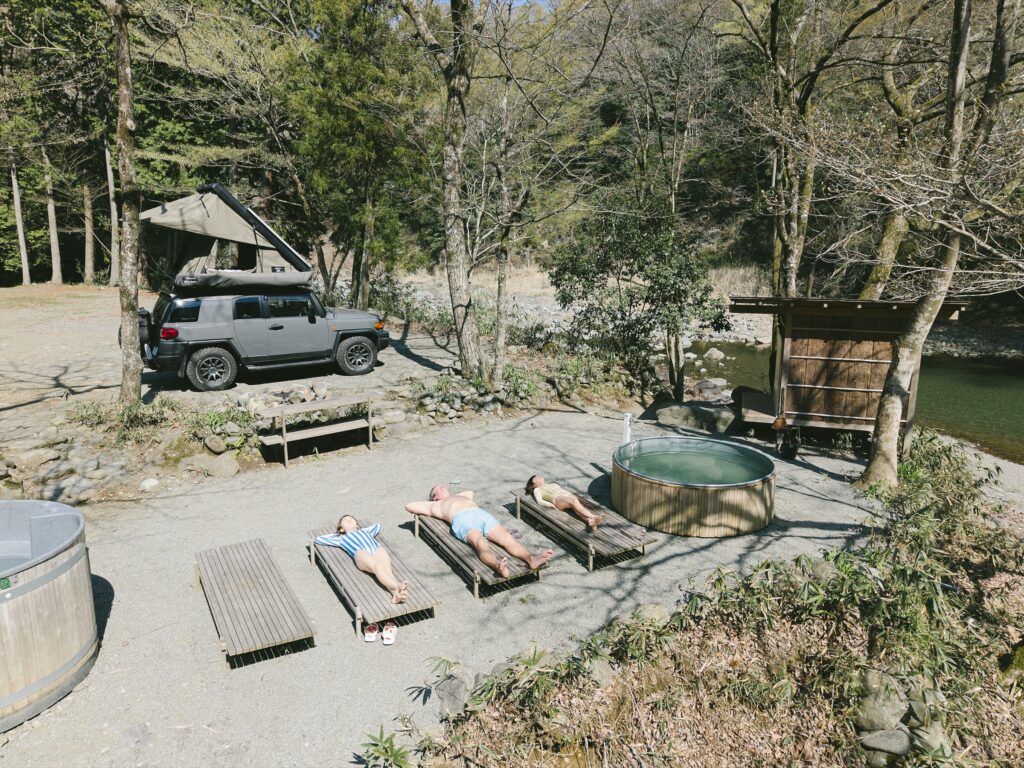
They’re paid, but modestly, and they remove all ambiguity: this is a place that exists for exactly what you’re doing. For anyone uneasy about the grey areas, an RV Park is the answer.
Michi-no-eki (roadside stations)
This is where the confusion lives, so it’s worth being precise.
Michi-no-eki are, legally and by design, rest facilities — not campgrounds and not accommodation. They exist so drivers can stop, use a clean toilet, and recover from fatigue before continuing safely. That’s why the car park and toilets are free and open 24 hours.
The Ministry of Land, Infrastructure, Transport and Tourism draws a distinction that’s often lost in translation. Resting or sleeping because you’re tired is fine — that’s precisely what the facility is for, and there is no blanket national ban on sleeping in your vehicle. What they ask you to refrain from is using the car park as accommodation: treating it as a free campsite in place of one.
There’s no official time limit, and no national list of stations that prohibit it. Each station sets its own rules, so signage at the individual site is what counts.
In practice the line is behavioural rather than legal, and it’s easy to stay on the right side of:
- Resting quietly in your vehicle, within the space your vehicle occupies, is what the facility is for.
- Putting out tables, chairs and awnings, cooking outside, running a generator or hanging washing is camping, and it isn’t.
So: behave like a driver taking a rest rather than a camper occupying a site. Keep your things inside the vehicle, don’t spread into space you don’t need, keep it quiet, take your rubbish with you, and follow whatever the individual station has posted. If overnight accommodation is the plan rather than an unplanned need to stop, use a campground or an RV Park — somewhere that exists for it.
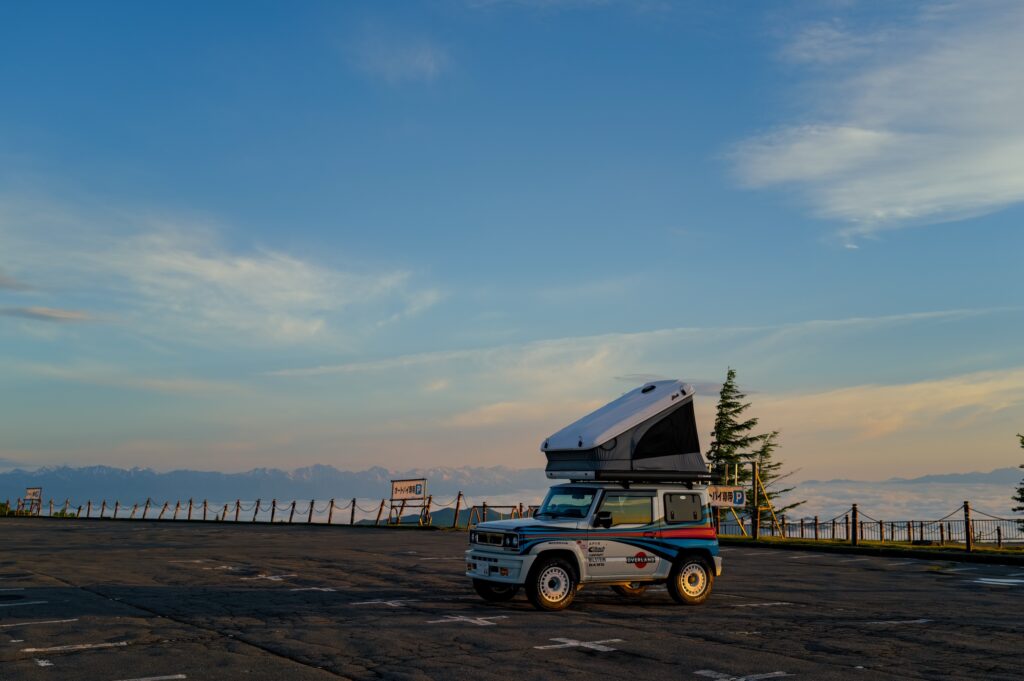
Where to park. Our own rule, learned the hard way: head for the furthest corner. Away from the building, away from the floodlights that stay on all night, and as far as you can get from the truck bays. Long-haul drivers often leave their engines idling through the night to keep the cab warm or cool, and a diesel running twenty metres away will cost you the sleep you stopped for. The far corner is quieter, darker and usually emptier — worth the extra thirty seconds it takes to drive round.
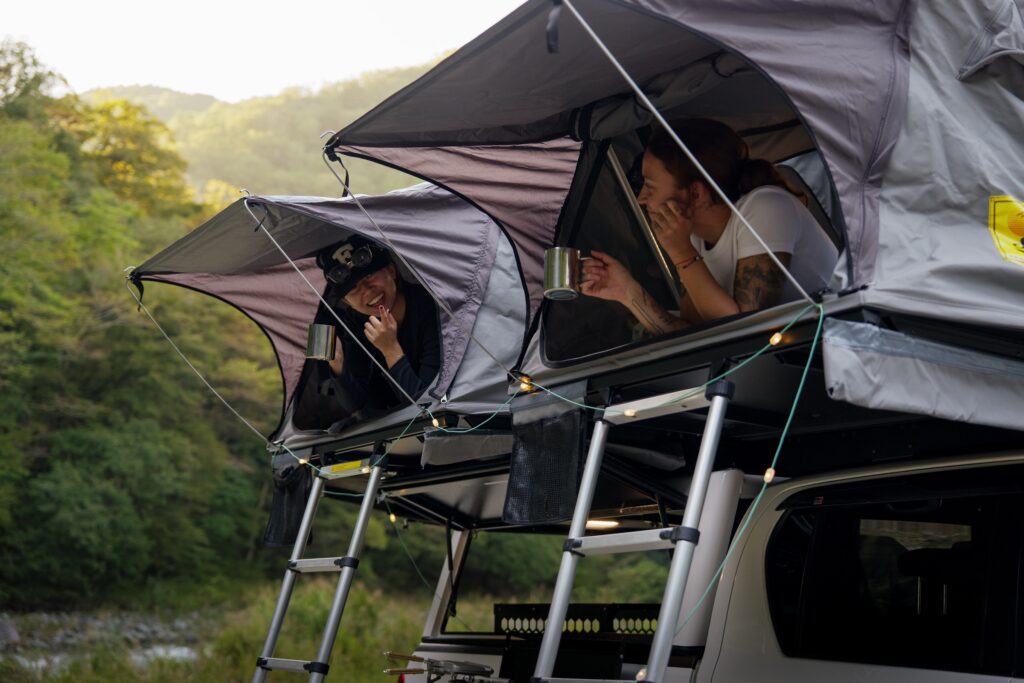
A note on rooftop tents. The practical rule we use is to stay within the footprint of your own vehicle. A rooftop tent sits directly above the vehicle and takes no additional ground, which is why it’s generally accepted alongside sleeping in the vehicle itself. A side-fold tent or an awning is different, because it extends into the space beside you — so if you’re in one of those, park in a corner or an end bay where the overhang doesn’t take a second space, and be honest with yourself about whether it reads as parking or as camping. Where a station has posted its own rules, those always come first.
Expressway service and parking areas work on a similar principle, more strictly. They exist so drivers can rest safely, including taking the sleep they need before continuing. They aren’t free accommodation or campsites, so don’t set up outside the vehicle or stay longer than the journey genuinely requires.
Informal spots
The quiet place beside a river, on a headland, at the end of a forest road. This is the one people fall in love with, usually around the third night once they’ve found their feet, and it’s the reason a lot of our customers come back.
It’s also the hardest category to generalise about, because there is no single nationwide rule covering it. A riverbank may be managed by a river authority. A forest car park may be municipal, prefectural, national park land or privately owned. A beach may have local restrictions. Ground that looks like nobody’s still belongs to somebody. Whether you can stay depends on who manages the land, what the local rules say, what’s posted on site — and, importantly, whether you’re parking or setting up camp, which are treated very differently.
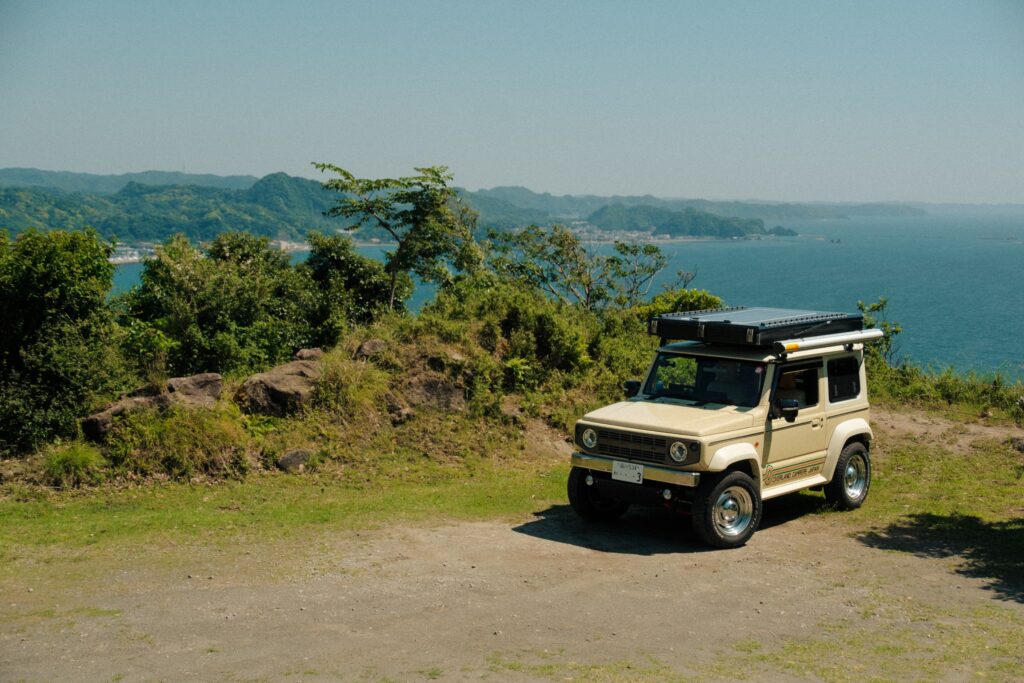
So: an empty car park is not a campsite. Check signs, barriers and posted hours before you settle in, and don’t use private or restricted land. And if opening a tent, cooking outside or putting chairs on the grass would amount to camping in that particular place, don’t do it unless camping is permitted there.
Our rule for informal spots is simple: no open fires. Anywhere, ever. This one has no exceptions. Not a small one, not on gravel, not in a fire pit stand, not because it looks safe. Fire is the fastest way to turn a tolerated practice into a banned one, and in a country of forested mountains and timber buildings the consequences of getting it wrong don’t stop at your campsite. The contained gas cooker in your vehicle is fine, and it will do everything a fire would have done. Save the fire for an auto-camp that permits them.
Within those limits, there is a great deal of Japan available to you — and the rest comes down to judgement, which is the part no list can give you.
How to read a spot
After enough nights out, this becomes instinct. Until then, these are the questions worth running through.
Look for signs first, before anything else. Almost every managed space in Japan will tell you what it expects, and almost always in Japanese only. Point your phone’s camera at anything posted — at the entrance, on the barrier, on the toilet block, on a post at the far end of the car park — and read it before you decide anything. Overnight parking, camping, fires, gates that lock at a set hour, seasonal closures: it’s usually all there. Thirty seconds of translating settles most of the questions in this article.
Arrive — or at least scope it out — before dark. Everything below is easier in daylight, and a spot that looked fine at nine at night has a way of revealing itself at six in the morning. If you’re planning a long evening somewhere else, drive past in the afternoon and have a look first. Otherwise, aim to be parked by five.
Who overlooks it? A house, a farm building, a shrine, someone’s field. If a person would reasonably feel you were in their space, you are.
Is anyone else here? Not proof of permission, but other vehicles clearly settled in for the night can be a useful indication of how the place is normally used locally.
Are you blocking anything? Access tracks, gates, turning space, a fishing spot someone will want at dawn. Farm and forestry vehicles start early.
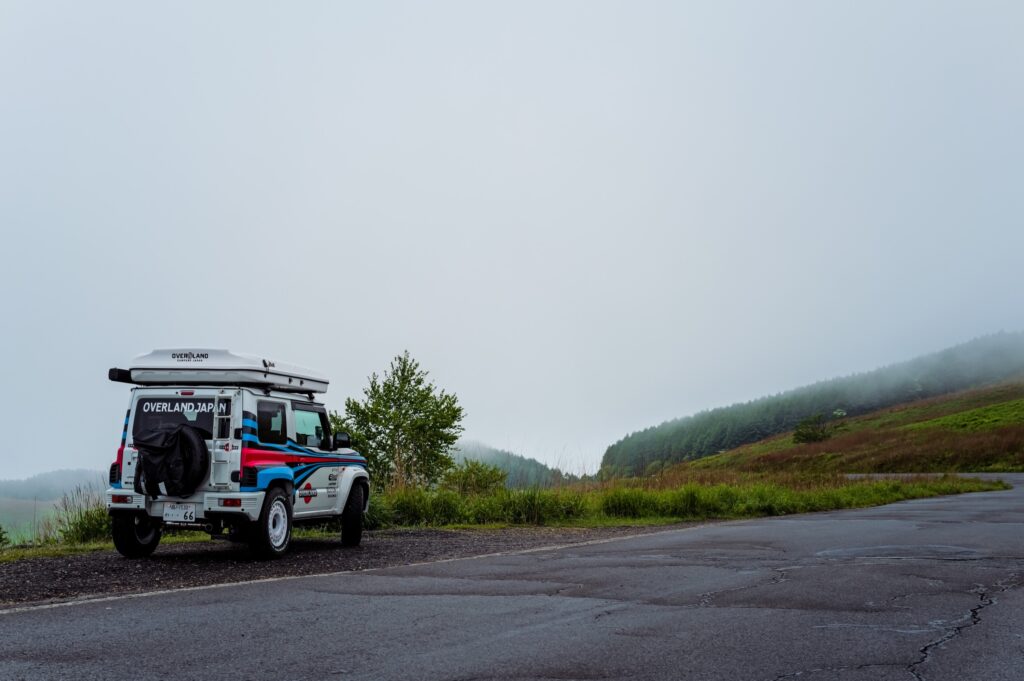
What’s the ground doing? River gravel is the classic trap. Japanese rivers rise very fast in rain, and upstream dam releases can raise levels on a clear day with no warning at all. Never stop on a gravel bar or in a dry channel, and give any river a generous margin of height. Check rainfall upstream as well as the forecast where you’re standing, and take dam-release signage, sirens and river-level warnings seriously — they’re there for exactly this.
What’s above you? Steep cut slopes, loose rock and undercut banks are worth a second look, particularly after heavy rain.
Wildlife. In parts of Honshu, Hokkaido and the mountains, bears are a genuine consideration. Keep food and rubbish sealed in the vehicle, not in the tent, and pay attention to local warning signs.
Arrive as a car, not as a campsite. Park first, look around, and understand how the place is being used before you set anything up. While a parking area is still busy there’s rarely a reason to unfold a tent, an awning or chairs — other people are using the space, and it’s theirs as much as yours. Day visitors mostly clear out around dusk. Give them their space, keep your own footprint small, and set up once you’re satisfied that staying is appropriate.
There’s a quiet advantage to these vehicles in Japan: they don’t dominate a place. People are genuinely curious and will happily come over to look, but nothing about them says caravan or typical RV, so they sit in a car park the way a car does. That’s goodwill worth protecting by keeping the setup tidy and the footprint modest.
How does it feel? Read the air, as it’s put here. If a spot feels wrong, it is. There’s always another one, and the second choice is often better.
The etiquette that makes all of this work
Free access to quiet places in Japan survives because most people don’t abuse it. That’s the whole arrangement, and it’s worth protecting.
Say hello (wave) first. This is the single best habit to build, and it’s the opposite of trying to go unnoticed. If there’s anyone around — a farmer, a shopkeeper, someone walking a dog — a wave and a smile costs nothing and changes everything. More often than not it turns into a conversation about the vehicle — and if they’re the owner, the manager or clearly connected to the place, that conversation is the natural time to ask whether staying the night would be all right. Even when they aren’t, locals know the local pattern: which spots flood, which fill up at dawn, where the road is closed, and where you’d be better off. That’s worth more than permission.
It’s worth understanding why this works. Japan is warm towards a visitor who is visibly a guest and visibly enjoying themselves. Someone parked in a corner hoping not to be seen reads very differently — not because anyone assumes bad intent, but because the behaviour itself looks like it has something to hide. Being open removes the question before it’s asked.
None of which contradicts arriving as a car rather than a campsite. Be discreet about the space you take up; be open about who you are.
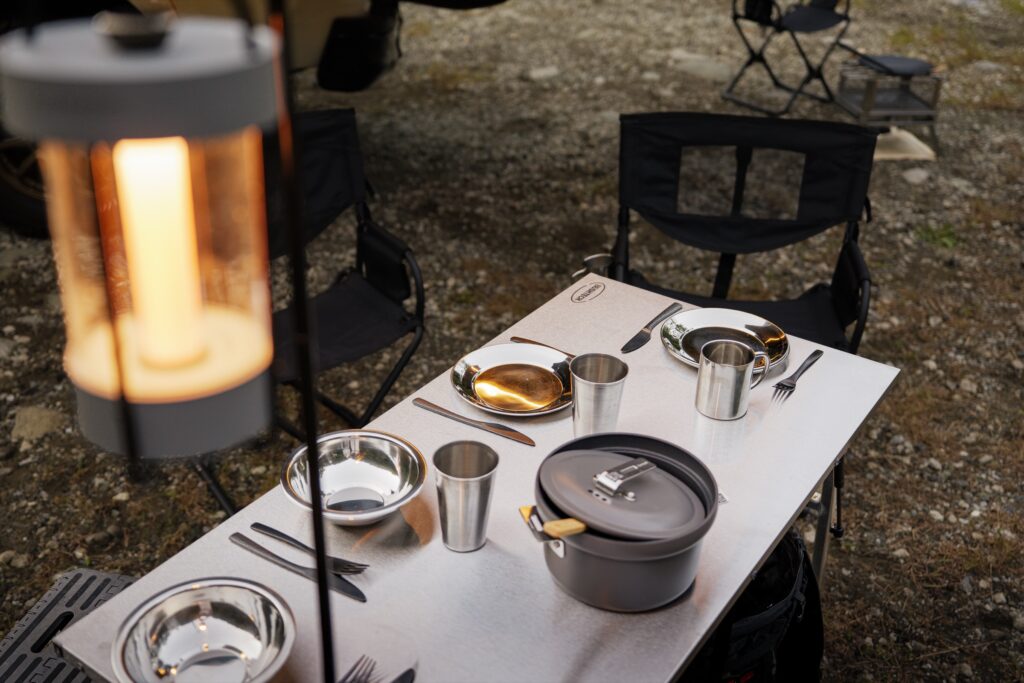
The rest is straightforward:
- Leave it cleaner than you found it. Not as clean. Cleaner.
- Take all rubbish with you. Japan has very few public bins, and camp sites and convenience stores are not disposal points for a week’s accumulation. Carry bin bags and sort properly.
- No fires unless the location explicitly permits them, and then follow that site’s rules on stands, pits and ash disposal. A fire stand doesn’t make a prohibited fire allowed.
- Keep noise low after dark and observe any posted quiet hours. Music off, voices down, generators off.
- Dispose of grey water only where it’s permitted. Not on the ground, not into a river, and not down an ordinary roadside drain — many of those run straight to a watercourse.
- Don’t outstay. One night, then move on.
- If someone asks you to leave, leave — courteously, immediately, and without argument. You’re a guest.
None of this is onerous. It’s the reason the country you’re travelling in still works the way it does.
One last thing, and it’s the part that matters most
This style of travel is still very new in Japan. Most of the people you meet won’t have seen anything quite like it and won’t be expecting you — and out in the countryside the reaction is usually curiosity, and pleasure that you came at all.
Rural Japan is shrinking, and plenty of these towns see a fraction of the visitors the famous places do. Someone who stops, buys something, eats somewhere local and takes a genuine interest makes more difference there than the same person would in Kyoto. So go there. Buy the local thing, whatever it turns out to be. Eat at the counter with six seats. Put some of your money into the places that aren’t already full of visitors. You’ll have a better trip and they’ll have a better week, and both of those are real.
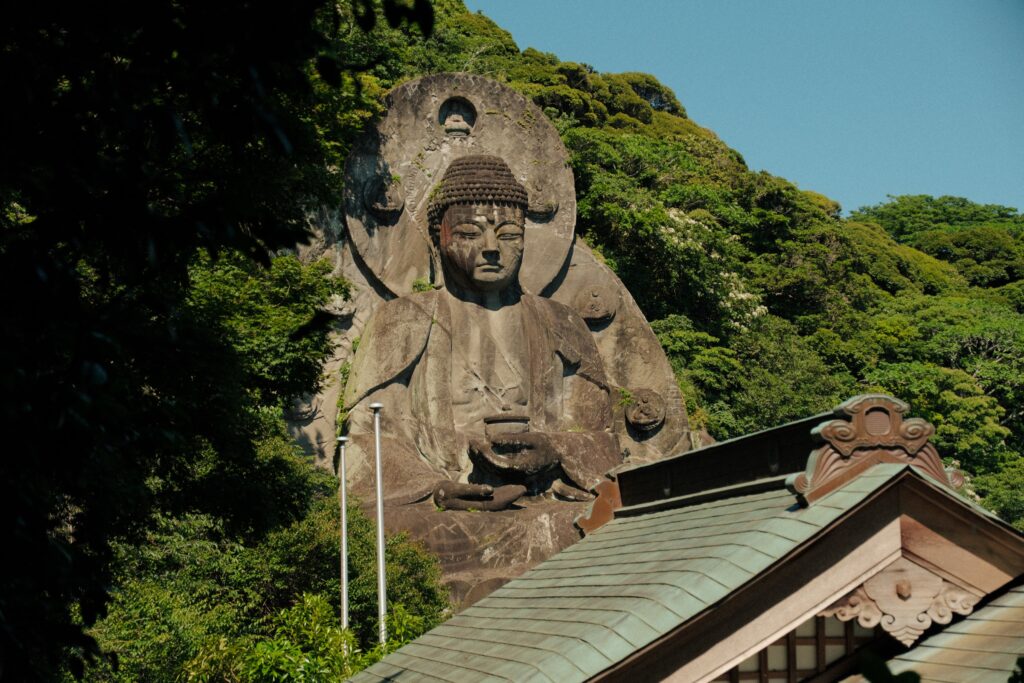
And then there’s the part we’d ask you to take seriously. In a lot of countries this kind of travel has become harder over the years — popular places crowded, or badly treated, and then the signs go up and the car parks close. Japan still offers an extraordinary amount of access and freedom, and that isn’t an accident of geography. It holds because the arrangement holds: quiet access in exchange for behaving well.
So please take the advice above seriously, even the parts that seem fussy. We’d all rather like to keep this going.
Planning your first trip’s nights
The approach we’d suggest, and the one most first-timers land on anyway:
Book the first one or two nights at auto-camps. It removes the biggest unknown from the start of the trip, and it lets you learn the vehicle somewhere with facilities and no time pressure.
Then decide how you feel. By the third day you’ll know how far you actually want to drive, what time you want to stop and what sort of place you’re looking for — which is a much better basis for planning than a spreadsheet made three months ago in another country.
At that point some people book the rest of the trip the same way and have a wonderful time doing it. Others start leaving days open, and that’s where the second half of this article comes in. Neither is the advanced version. Do whichever one you’re enjoying.
Use michi-no-eki as the safety net, not the plan. When a day runs long or the weather turns, having one within reach means you’re never forced into a bad decision.
And ask us. We’ve spent years building a map of places we’ve used or checked ourselves — rivers, coastlines, forest clearings, hot spring towns — with notes on each one. At handover we’ll point you at the ones that suit your route, your vehicle and the time of year. It’s the part of the job we enjoy most, and it’s not information you’ll find on a website.


