

Most people’s first real overnight experience of nature is, frankly, terrible.
There’s the tent version. Borrowed from someone’s garage, or bought in a hurry off a supermarket shelf or an online marketplace — the one that claimed to do everything, for the price of nothing. A sleeping bag ordered the same week on the same promise. Ground that turns out to be mud over rock, discovered somewhere around midnight when you finally lie down on it. Rain at three in the morning that doesn’t stop, and then doesn’t stay outside either — first as a damp patch at the seam, then as a slow drip onto the sleeping bag you can’t move away from. By eight the next day the trip is over, everything is wet, and a decision has quietly been made: this isn’t for me.
Then there’s the other version, which catches people who thought they’d been sensible. The boxed-in camper van that ticked every box on the booking page — an assembly bed, a kitchenette, a fridge, all of it. Then you’re actually living in it. The kitchen only works plugged into facilities. Two people can’t pass each other. Whatever you need is behind the thing you needed first. The bed gets assembled from cushions every night, and every night you slide slowly into the crack where two of them meet, and wake up unrested. It rains for a day, and everyone spends eleven hours in a space the size of a capsule hotel coffin.
And then the part nobody warns you about. You came for the mountain views and the glimpses of river, and you’re looking at them through a small boxed window. Sealed in, with the world happening somewhere else — outside — everything flattened and muted by a pane of glass, removed from the exact thing you drove all that way to be inside. Nothing exactly fails. It just never feels good, and somewhere around day three you catch yourself counting how many are left.
Both arrive at the same conclusion, and the conclusion is almost always wrong. Neither trip proved anything except that the equipment was wrong and nobody had been set up to succeed. Give the same person a proper bed, a kitchen that works in the open air, room to find their own place to stand, and a quiet moment to take in what’s actually around them — plus someone to show them how it all fits together — and the verdict changes completely. Usually somewhere around the second morning.
That gap is the whole reason Overland Campers Japan exists. We aren’t a vehicle rental company that happens to throw in some camping gear. We’re an experiences business that operates in nature, in Japan, and the vehicle is how we deliver it.
First time? The short answer. To rent and drive one of our campers you need your home-country licence, an International Driving Permit issued under the 1949 Geneva Convention — or an official Japanese translation, if your licence comes from one of a handful of countries — your passport, and a credit card in the driver’s name. No camping experience, no equipment of your own and no Japanese required. Everything else is already in the vehicle.
What is overlanding?
We didn’t invent the word, and we’re not precious about it. It has been in use for decades by people crossing Australia, Africa and the Americas with rather more serious intentions than yours this time round. But it describes this better than anything else does.
Overlanding is self-reliant adventure travel toward remote places, where the journey itself is the memory rather than the destination. The vehicle carries your bed, your kitchen, your fridge and your power, so you aren’t necessarily dependent on always booking ahead. You can decide at four in the afternoon where you’d like to wake up, and change your mind twice before you get there.
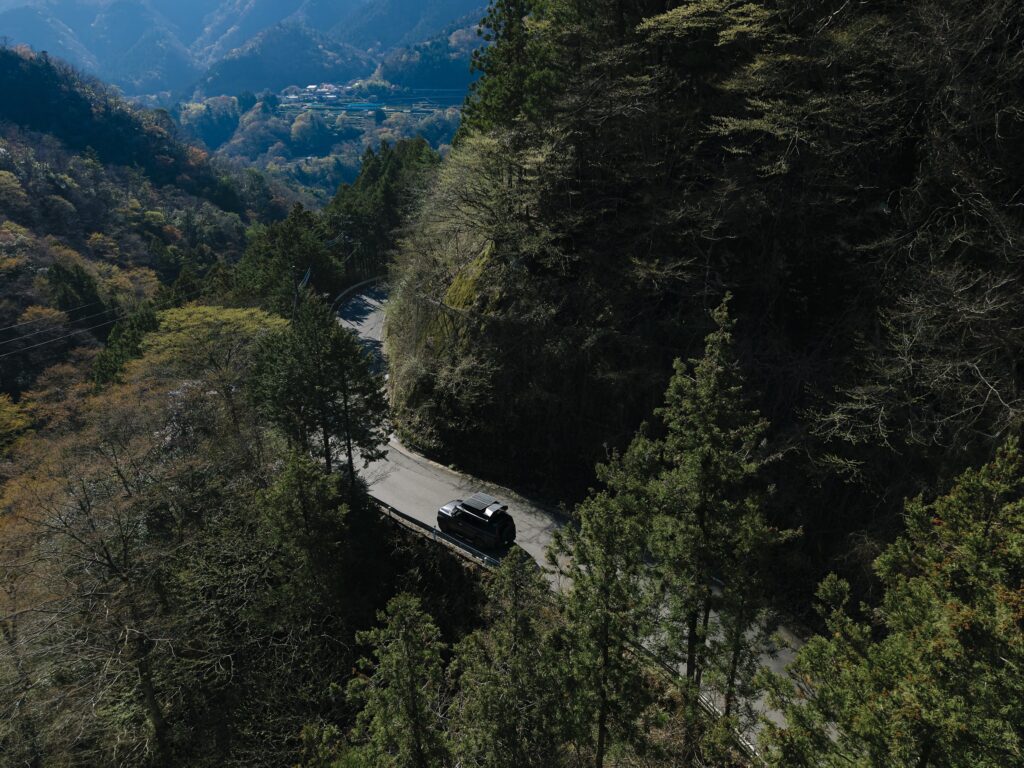
That’s the real distinction. The alternative — what we think of as checklist travel — runs between two fixed points with a booked activity at each end. The hours in between are just transit: someone else’s plan being executed, with very little attention left over for wherever you happen to be.
Overlanding doesn’t have to work that way. You can follow a route if you want one, and most first-timers do; we’ll help you shape it. But nothing obliges you to be anywhere.
If a river turns out to be better than the ocean, you stay at the river. If a valley turns out to be better than the city, you stay in the valley. If a small town turns out to be better than a viewpoint that’s clouded in anyway, you spend the afternoon in the small town. If the weather moves, you move with it.
In Japan this works unusually well, for a reason worth understanding. The road network here is expansive, beautifully engineered and maintained to a standard most countries don’t attempt — right down to single-lane routes over mountain passes. And it connects a domestic travel culture built for Japanese travellers first. The roadside stations, the onsen towns, the regional specialities, the viewpoints with a car park and a clean toilet at the top: none of it was laid on for foreign visitors. It was made by a country proud of its own places, for its own people.
Which for a long time left most of it effectively closed to visitors — not by any rule, but for want of a way to reach it. Trains and timetables don’t go there. A camper does. That’s really what we’re handing over at the depot: the key to a country that has spent decades quietly building something beautiful for itself, now open to you at your own pace and on your own terms.
The rest follows from that. Clear-air mountain roads switchbacking up through the passes. Villages that look drawn rather than built — timber houses, a river running through the middle, mist sitting in the valley behind them, the sort of place you’d assumed had been invented for an animated film. Coastal routes carrying almost no traffic. A convenience store within reach of nearly everywhere and an onsen within reach of most places. It feels genuinely wild and is almost entirely civilised in practice, which makes Japan one of the better countries on earth to do this for the first time.
And there’s a particular pleasure that belongs almost exclusively to travelling this way. You’re hungry, you’ve driven further than you meant to, and there’s a single lit sign on an otherwise empty road. You stop, because what else would you do. Inside is a counter with six seats, run by one person who has been making the same thing for thirty years and is visibly pleased that somebody came. It turns out to be the best meal of the trip. That kind of hospitality hasn’t disappeared from Japan — it simply doesn’t live in the cities, and you can’t reach it on a timetable.
Why is the bed on the roof?
People sometimes assume this is styling, or a gimmick. It’s neither. The rooftop tent is fundamental to how overland travel works — it’s why the vehicle can go where it goes and still be somewhere you want to sleep at the end of it.
A rooftop tent solves a long list of practical problems. It lifts you up into the breeze, out of the still air that sits at ground level on a summer night. It keeps you clear of wet and uneven ground, which is most ground. It puts you above eye level, which is privacy you don’t get in a clearing or a car park. It opens in minutes and closes almost as fast, which matters enormously when weather arrives or you simply want to move on. And because the sleeping space sits above the vehicle rather than inside it, the whole interior stays available for the kitchen, storage and gear — instead of being converted back and forth between bedroom and living space twice a day.
Those are the reasons a serious traveller chooses one. They aren’t the reason you’ll remember it.
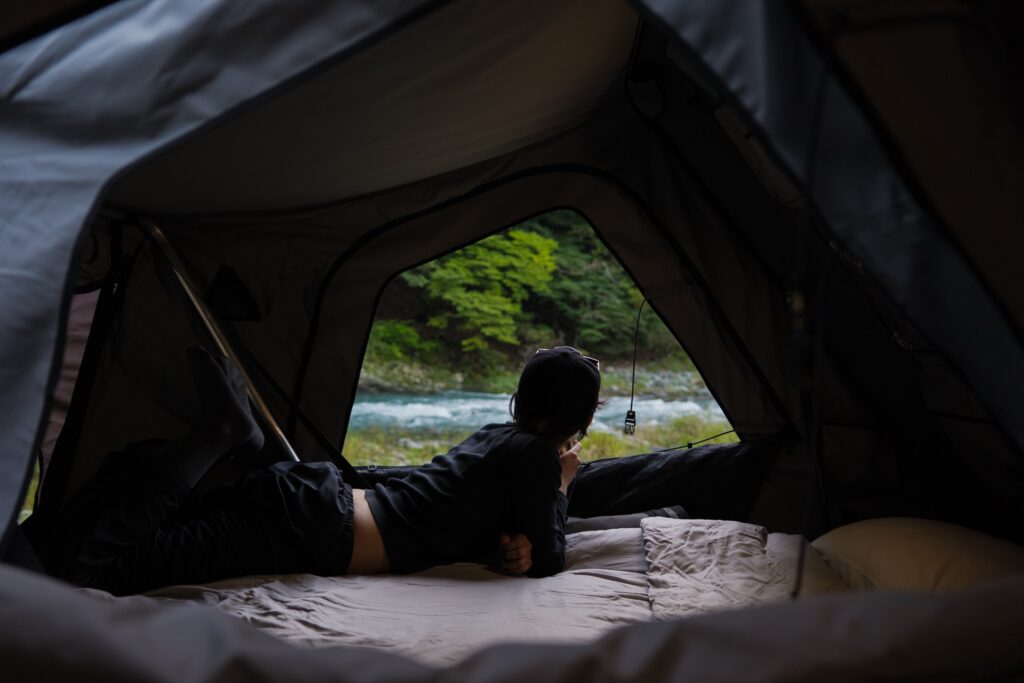
Unzip the windows and you aren’t sealed in. You’re immersed in it — warm, dry, safely off the ground, with the valley or the river or the sky directly in front of you and nothing in between. Rain on canvas a few inches above your head. Wind moving through the trees. The temperature dropping as the light goes. It’s your very own private cocoon and an open window at once, which is a rather better version of a night at the cinema, except the screen is real and it belongs to you alone.
Which is precisely the opposite of the pane of glass.
The bed is the part that surprises people. Click, click, push, sometimes a pull — the tent opens and the bed is already made, mattress and bedding in position, exactly as you left it that morning. Nothing to assemble, inflate or tuck in.
Compare that with the way many traditional compact campervans handle sleeping. They photograph comfortably. In practice it’s the nightly rebuild described at the top of this page — bench cushions and a table that drops down, specified for sitting on rather than sleeping on.
It’s the rooftop arrangement that makes a compact 4×4 work as a camper at all — which is also why the tent itself is not a place to economise. We fit the best made anywhere in the world, sourced wherever that happens to be. None of it shows up in a listing photograph, where every rooftop tent looks more or less the same. It’s in the hand, and you notice it every night.
What you need to rent a camper van in Japan
Easier than most people expect: a valid licence with the correct permit, your passport, a credit card in the driver’s name, and everyone who intends to drive present at handover.
For most visitors the permit means an International Driving Permit issued under the 1949 Geneva Convention, obtained in your home country before you travel — they can’t be issued inside Japan. Licences from a small number of countries follow a different route using an official Japanese translation instead, and not every international permit is valid here.
It’s the one piece of admin worth sorting early rather than the week before, and the details matter enough that we’ve set them out in full on our FAQ page.
You don’t need a special vehicle licence, previous camping experience, your own camping equipment, or any Japanese-language ability.
How booking works
Choose a vehicle and dates, send an enquiry, and we’ll come back with a full quote. Once that’s accepted and payment clears, the booking is confirmed and the vehicle is yours for those dates.
The full flow — timings, payment, deposit and return — is set out step by step. What’s worth talking about properly is what happens on the day you collect it.
Handovers in person: setting you up for success
The day you collect the vehicle is the part of this we’re least willing to rush.
Videos go out in advance covering the camper and its systems, so you can watch them on the plane and arrive already half-familiar. Then you meet us at the base and we go through it together — around thirty to forty minutes, unhurried, with the vehicle in front of you and one of our team who uses these campers on their own weekends.
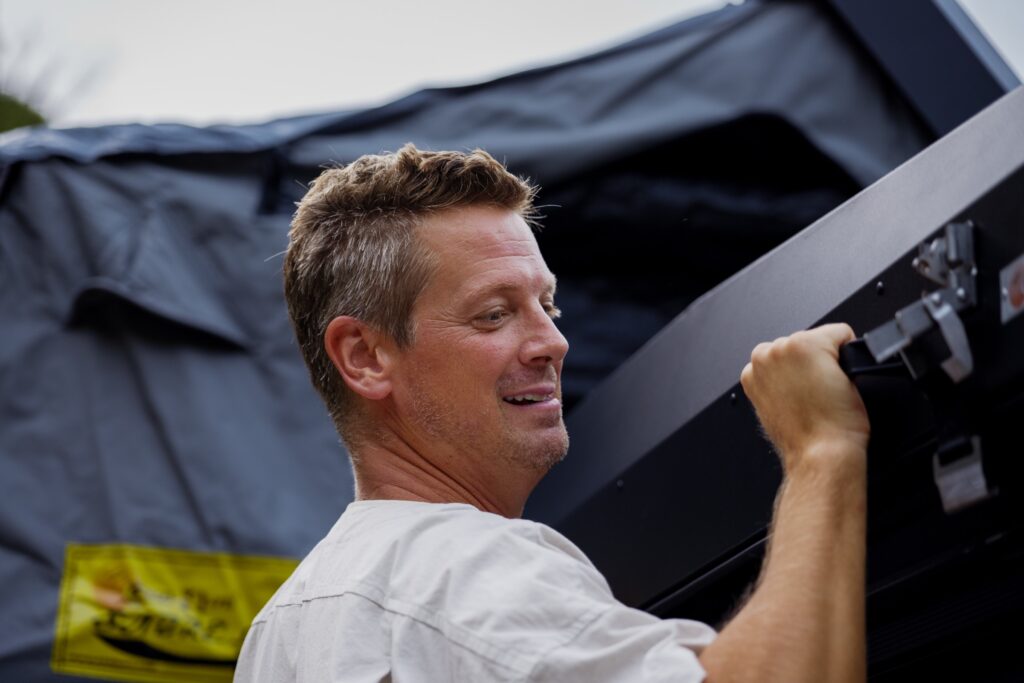
How the tent opens. How the kitchen sets up. How the power works. What to do if something doesn’t behave. Which passes are open, which sites have closed for the season, where the weather is going this week and where we’d head because of it — the kind of thing that isn’t written down anywhere, because it changes weekly.
Ask everything. It’s the one moment in the whole trip where a question costs you nothing and the answer is worth the most, and the people who ask the most tend to have the best week.
There’s a shelf of things we simply lend, too — binoculars, a hair dryer, chargers, a badminton set and a frisbee for the afternoon nobody planned. And a food and drink selection at the base, from farm-direct A5 wagyu to a few bottles worth opening, which mostly exists to save you an hour in a supermarket before you’ve even started.
Forty minutes at the start buys back a great deal of your first two days — the awning you’d otherwise be working out in the rain, the battery system you’d be guessing at, the campsite you’d have driven two hours to find shut. We’d rather you spent that time somewhere with a view.
Where you’ll sleep
Where you sleep is either somewhere to lay your head between one part of the journey and the next, or it’s the whole point of the day — a base camp chosen for the river beside it, the sky above it, or the silence. Both are valid, often on the same trip.
You can plan this properly, and most first-timers should.
Auto-camp sites are the straightforward option and there are well over a thousand of them, many in genuinely beautiful positions — lakesides, river valleys, forest clearings. They’re bookable in advance, and having two or three reserved gives a first trip a comfortable backbone. Book early for spring, autumn and national holidays.
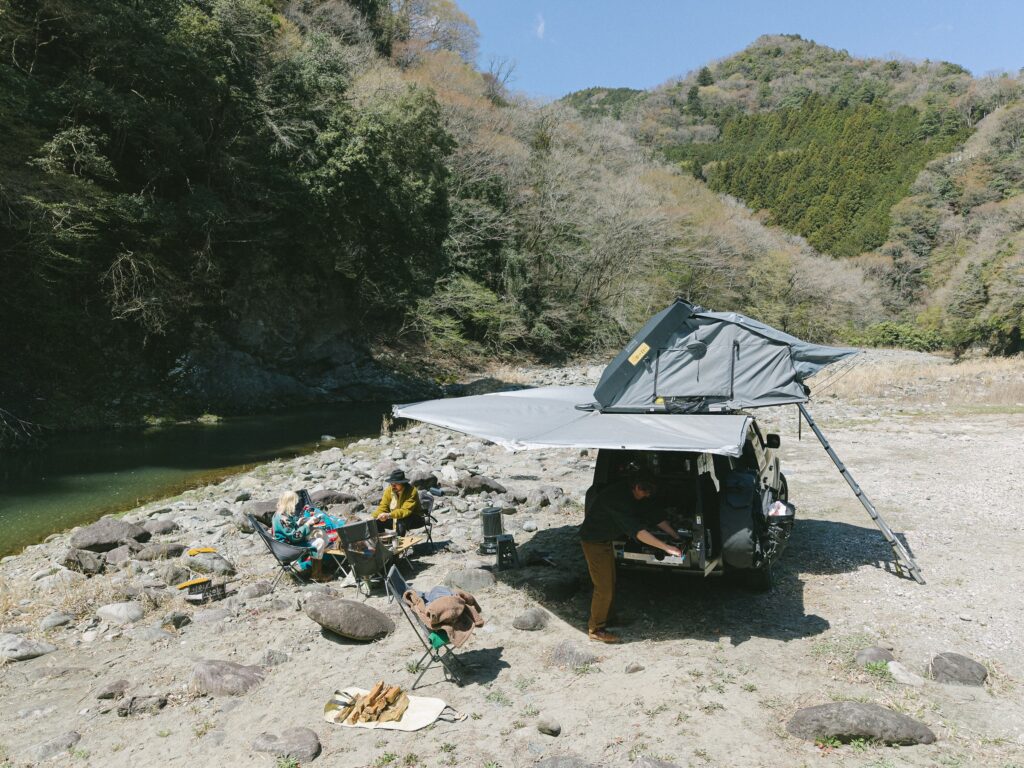
Most visitors are genuinely surprised by the standard. Japanese auto-camps are clean, well organised and thoughtfully run, and a good number are close to luxurious — heated toilet seats, proper hot showers, onsen or bath facilities on site, and a shop selling firewood, ice, local produce and something easy to make for dinner.
Michi-no-eki (roadside stations) are the flexibility layer: a national network of roadside rest areas with large free car parks and clean 24-hour toilets, where sleeping in your vehicle for a single night is generally accepted. Useful when a day runs long or plans change. The etiquette is firm — one night only, no open fires or camp set up outside the vehicle, and leave the space exactly as you found it.
Nature parking — quiet spots beside rivers, coasts and mountains — is the one people fall in love with, usually around night three once they’ve found their feet. It’s broadly tolerated across Japan. Check any signage with a translation app before you settle in, and read the air, as it’s put here. If a spot feels wrong, it is.
You don’t have to choose an approach now, and you certainly don’t have to improvise. We go through all of it at handover, and our route ideas pair regions with places we’ve actually stayed. Most people book the first couple of nights and leave the rest open.
Is driving in Japan difficult?
Easier than people imagine, and considerably more pleasant.
Japan drives on the left, which is either already familiar or a quick adjustment to make. Roads are exceptionally well maintained, right down to single-lane mountain routes. Expressways are excellent and often signposted in English. Speeds are low. And Japanese drivers are, as a rule, patient and courteous in a way visitors comment on constantly — very little horn, very little aggression, room made for you when you need it.
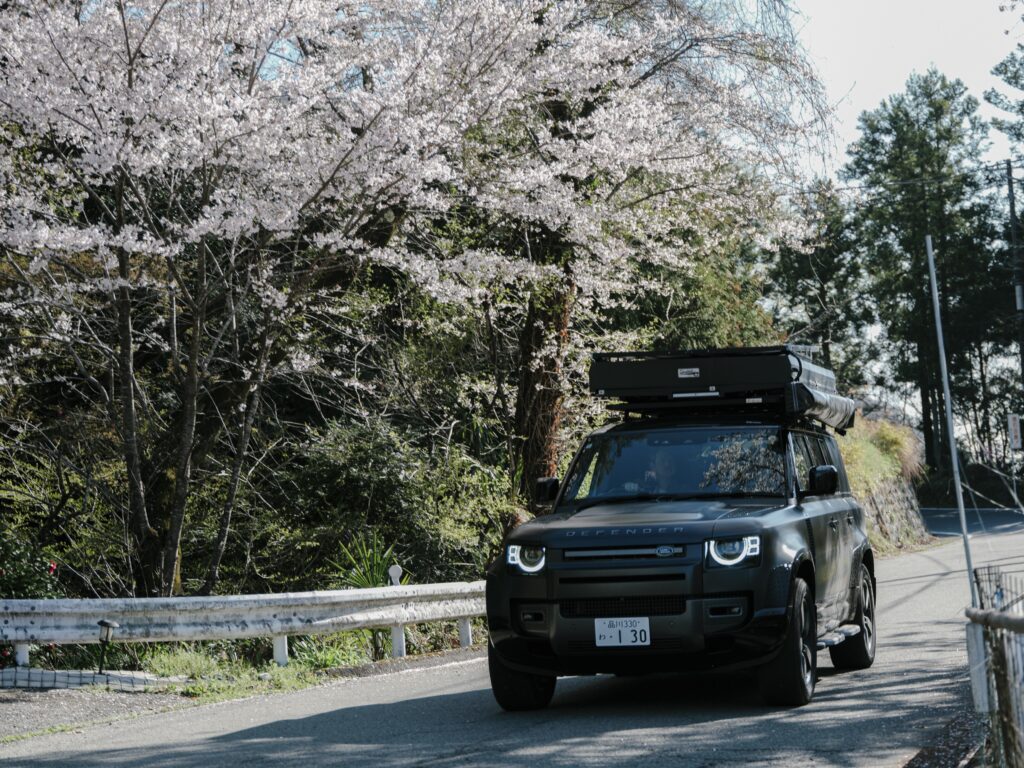
Every vehicle has Apple CarPlay and Android Auto, so navigation runs in your own language on your own phone, with your own playlist over the top. In practice you drive much as you would at home.
Tolls are handled for you. Every camper comes with an ETC card fitted, so expressway gates open as you approach and nothing has to be counted out at a booth — you simply drive, and it’s settled at the end. One less thing to think about on a long day.
The only real planning note is that the run home from Mt Fuji always takes longer than the map suggests. Allow for it and it’s a pleasure rather than a problem.
Our campers are 4×4, which matters for confidence on steep, wet or gravel forest roads, and again on snow-affected passes in the winter months. It isn’t permission to leave the road: our campers are built for formed roads and legal tracks, and off-road driving is not permitted under our rental terms.
What to bring
Clothes, a licence, a toothbrush — and an appetite for a bit of challenge, on the off chance you’re about to pick up a new passion for life. That last part is the only thing we can’t pack for you, and it’s the part that decides how much of this you take home.
Everything else is already in the vehicle: rooftop tent and seasonal bedding, a full kitchen with real knives and everything needed to cook, a fridge on a dedicated battery system that also charges cameras and laptops, table, chairs, lighting and awning. What’s listed on the vehicle page is in the vehicle when you arrive, for the price quoted. There are no upgrade tiers and no conversation at the counter about the things that turned out not to be included, because there’s only one standard. You can see the full list here.
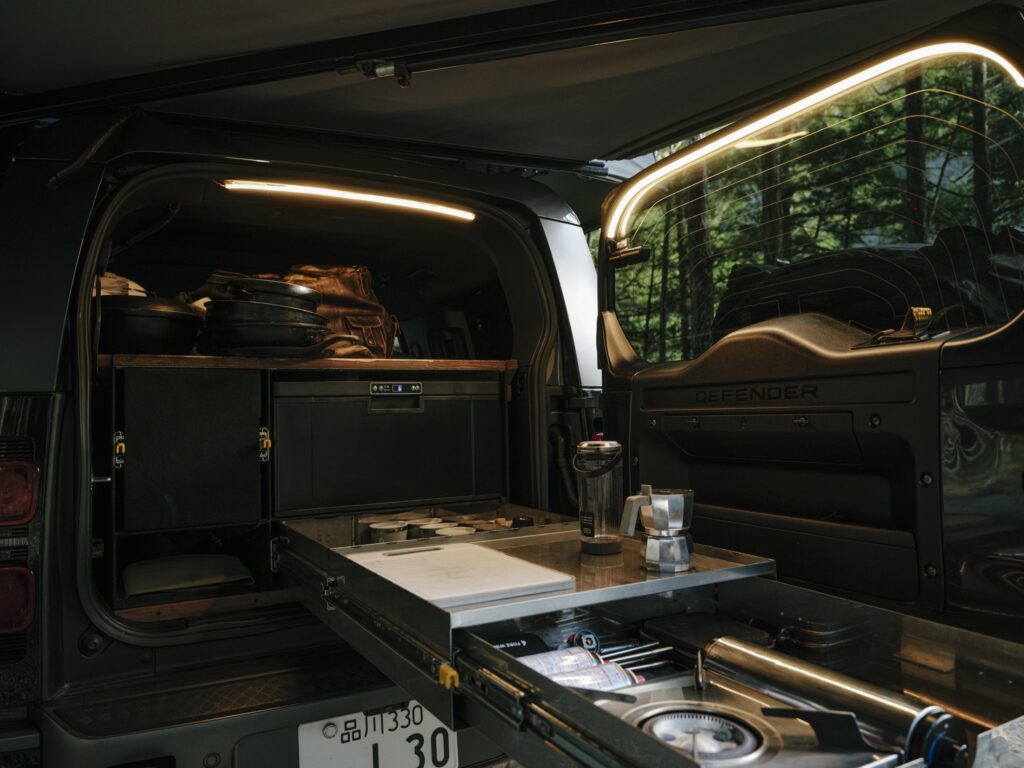
We’re able to work that way because we use these vehicles ourselves. Where the best equipment for a job isn’t sold in Japan, we import it. Where it doesn’t exist, we build it.
The result is a camper built to be interacted with rather than checked into — an extension of the trip, not a hotel room that happens to have wheels.
What the first twenty-four hours look like
You collect the vehicle in the morning, flat white in hand from a café you found on the walk over. Both bases are placed on purpose. Tokyo sits in Yutenji — downtown, six minutes by train from Shibuya and around thirty from Haneda, and on the Mt Fuji side of the city, so you’re on the expressway quickly rather than crossing town first. Fukuoka is at Fukuma on the northern coast, close to Hakata and the airport, and already a step out of the city into coastline.
By mid-morning you’re clear of it. Two to three hours from Tokyo puts you among the Fuji lakes, on the Izu coastline, or climbing into the foothills of the Southern Alps. From Fukuoka, an hour reaches the Itoshima coast.
You stop for a snack because the view deserves it.
Mid-afternoon you start thinking about where to sleep — or you don’t, because you booked a site weeks ago and you’re simply driving to it. Both are good ways to travel, and most first-timers sensibly do the second for the first night or two. Either way, by five you’re parked. The roof tent goes up. The kitchen slides out. You cook something simple — or you cook the A5 wagyu you picked up at the base on the way out, because it seemed like that kind of trip. It gets dark, and in much of rural Japan that means genuinely dark — enough stars to make people go quiet for a while.
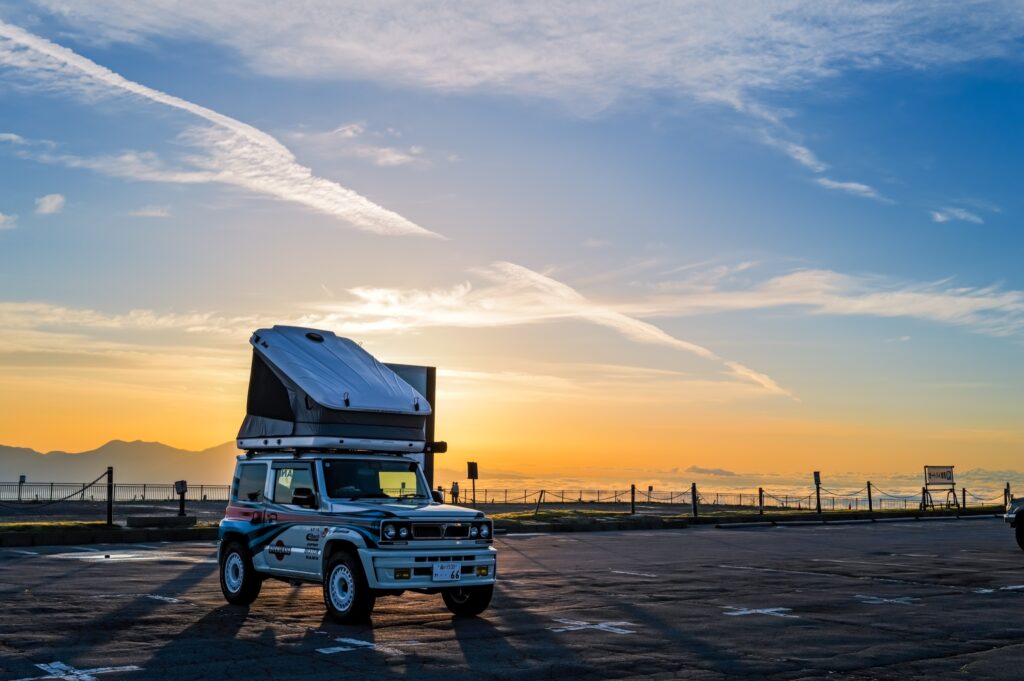
In the morning you climb down, put the moka pot on, and share a coffee looking out at something you chose the night before, working out whether it’s an eggs sort of breakfast. Then you decide what the day is. There’s usually an onsen involved.
Leave room to change your mind
The real advantage of this kind of travel is what the vehicle makes possible: at any point on any day, you can turn a different way.
Japan rewards that in every direction. North, south, east or west from either of our bases, there is no bearing that doesn’t lead to something worth finding, and very little of it appears on anyone’s list of things to see in Japan. The trips people describe to us years later are almost never the ones that went to plan. The best moments arrive by apparent accident — a road taken because the name looked interesting, a town stopped in because it happened to be lunchtime, a valley entered for no particular reason.
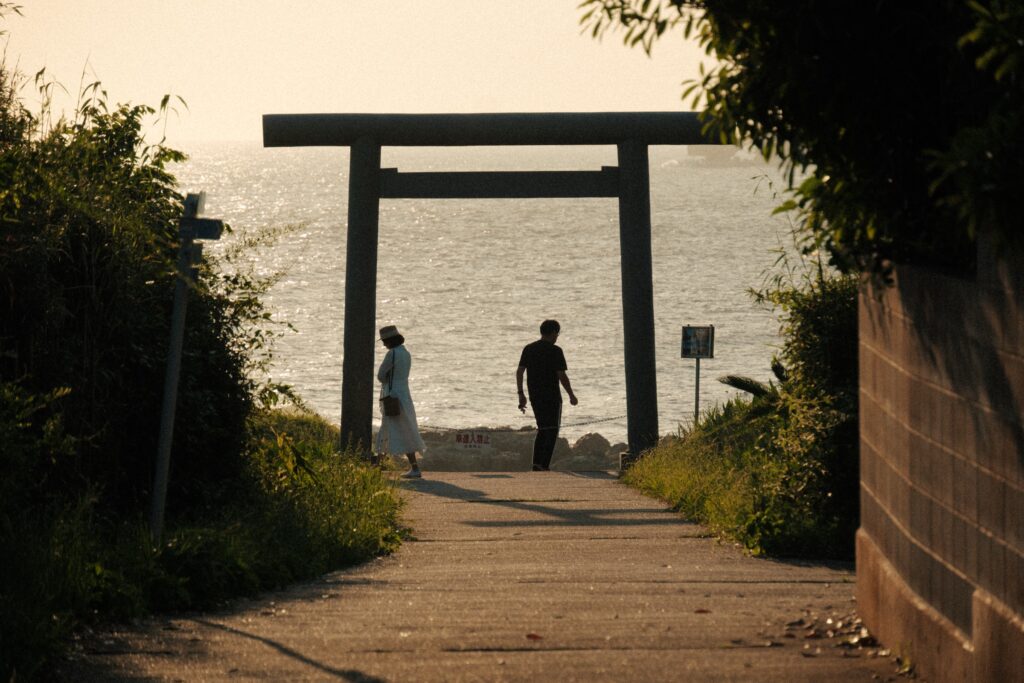
That isn’t luck. It’s what happens when there’s enough slack in the schedule for curiosity to have somewhere to go. Which is the practical argument against over-planning: five days is not enough to drive to Hokkaido and back, and trying means seeing Japan through a windscreen. Pick one region and let it be enough.
Then be genuinely curious about wherever you end up. Every prefecture here is proud of something — a fruit, a fish, a noodle, a pottery, a sake, a way of doing one particular thing better than anywhere else does it. Ask about it. Buy it at the roadside stall and eat it standing up. Interact first, and people will tell you exactly where to go — they enjoy being asked, and there’s a fair chance they’ll feed you while they’re at it. The vehicles help more than you’d expect. They’re distinctive enough that people wander over to look at them, which quietly does the hardest part of starting a conversation for you.
Allow yourself to be the curious traveller. Without exception, the people who come back to us having had the best possible trip are the ones who did.
Where it tends to lead
We should be honest about what usually happens next, because it happens often enough that we’ve stopped being surprised by it.
People book this as a novel way to see Japan. Somewhere around the second morning something shifts. They start noticing how the vehicle is put together — why the drawer sits at that height, why the battery is sized the way it is, why the tent is on the roof. By the end they’re asking what they’d build themselves, and where you’d source it.
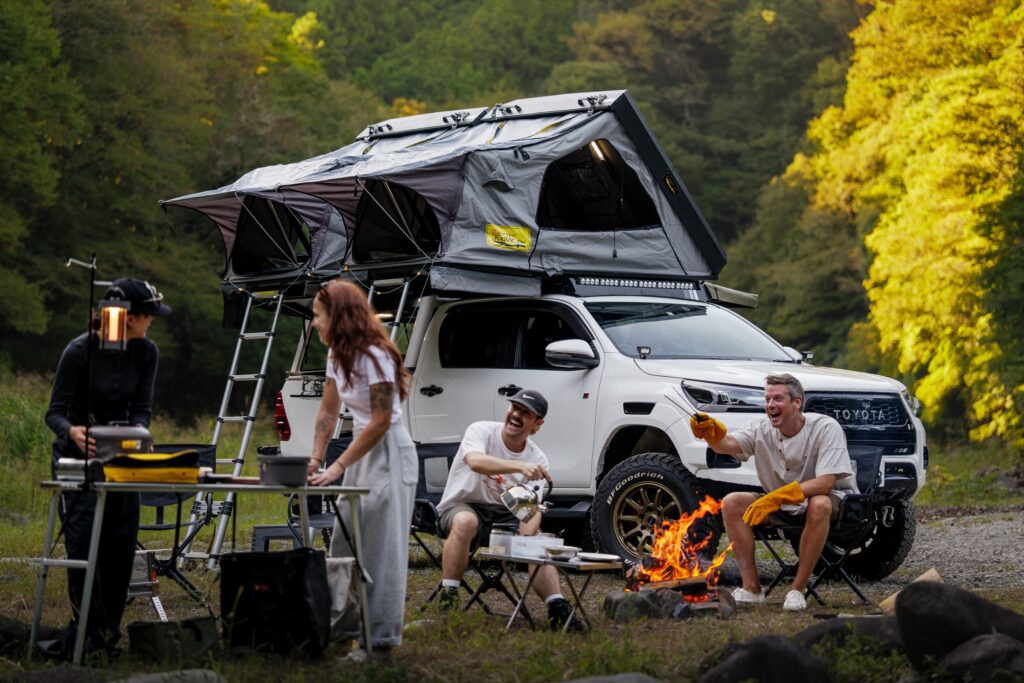
That’s the part we enjoy most. A first trip done properly doesn’t just make a good holiday. It tends to open up a way of travelling that people keep coming back to for years, at home as much as here.
Bring a licence, a rough direction, and a willingness to change it. We’ll handle the rest — and if you’d like help choosing a vehicle or shaping a first route, just ask.
Choose your camper › · See what’s included › · Route ideas ›


